
When someone is arrested in Forsyth County, one of the first terms you will hear is cash bail. It is a specific amount of money set by a judge that must be paid to the court to secure a person's release from jail. If you need help with bail bonds in Forsyth County, we are available 24/7 to provide clear steps.
This payment is not a penalty or a fine. It is the court's way of ensuring the accused person returns for their required court dates. If they attend every court appearance, the money is returned once the case concludes.
Understanding the Purpose of Cash Bail
Cash bail is a central part of the justice system in Georgia, including in Cumming, Alpharetta, and Johns Creek. Its goal is to create a financial reason for a defendant to come back to court. Since the person is presumed innocent until proven guilty, the bail serves as collateral held by the court, not a punishment.
While the concept of pretrial release is old, its modern application has changed. The U.S. Commission on Civil Rights found that pretrial detention rates increased by 433% between 1970 and 2015. Understanding how this system works is the first step toward navigating it effectively.
How Cash Bail Works in Practice
After a judge sets a bail amount, you have a choice. You can either pay the full amount directly to the court or work with a licensed bail bond agent.
- Paying the Full Amount: If you pay the full bail in cash, the court holds that money until the case is resolved. As long as the defendant appears at every court date, you receive the full amount back, minus any court fees or fines.
- Using a Bail Bond Agent: Most families do not have thousands of dollars available for an emergency. When the cash bail is too high, a bail bond agency offers a practical and fast solution.
The rules for paying the court directly can be complex. To learn more about this process, read our article about whether you can bail yourself out of jail.
Cash Bail vs. Bail Bond at a Glance
What is the difference between paying the court and calling a bail bond agent? This comparison explains it.
| Feature | Paying Full Cash Bail | Using a Bail Bond (Like One Call) |
|---|---|---|
| Upfront Cost | You pay 100% of the bail amount. | You pay a small percentage (a non-refundable fee). |
| Financial Risk | You risk losing the entire amount if a court date is missed. | The bail bond company assumes the full financial risk with the court. |
| Speed & Expertise | Can be slow; requires navigating court procedures on your own. | Fast and efficient; we handle the paperwork and court process for you. |
| Asset Impact | Often requires using savings, retirement funds, or property. | Protects your assets; you only pay our manageable fee. |
A bail bond makes release accessible without creating a financial crisis for your family.
The Role of a Bail Bond Agent
A bail bond agent in Forsyth County is a professional who helps get someone released for a fraction of the total bail amount. Instead of paying the court a $10,000 bond, you pay a much smaller, non-refundable fee to a company like One Call Bail Bonds.
We then post a bond with the court for the full $10,000, taking on the financial risk. Our service makes getting out of jail immediate and affordable, preventing families from draining their savings. Our job is to handle the confusion, manage the paperwork, and get your loved one home fast.
How a Judge Determines the Bail Amount

After an arrest in Forsyth or Hall County, the process begins. The first step toward getting someone out of jail is having a judge set the bail amount. This figure is determined during a hearing, often called a first appearance or bond hearing.
This hearing usually occurs within 24 to 72 hours of an arrest. A judge reviews the case details and decides on the conditions for release, with the cash bail amount being a key part. Understanding the factors they consider can provide clarity.
Our role is not to offer legal advice but to provide a calm explanation of what is happening. Once the bail amount is set, we can act quickly to help.
Key Factors a Judge Considers
In Georgia, judges follow specific guidelines but also have discretion when setting bail. The main goal is to set an amount high enough to ensure the defendant returns for their court dates, but not so high that it is purely punitive.
The judge assesses the risk by looking at all available information to balance the defendant's rights with public safety and the court process.
A judge’s decision on bail balances the defendant's constitutional right to pretrial release against the need to protect the community and ensure court proceedings are respected. This is general information and not legal advice.
Nature and Severity of the Charges
The most significant factor is the charge itself. A serious felony will almost always have a higher bail amount than a misdemeanor. The court considers the potential penalty if the person is convicted.
A non-violent property crime, for example, will likely have a much lower bail than an offense involving violence. Judges in places like Cumming and Gainesville use established guidelines but can adjust the amount based on the specifics of each case.
- Severity of the Offense: Felonies are treated more seriously than misdemeanors, resulting in higher bail.
- Presence of a Victim: If the alleged crime involved a victim, particularly with violence, the bail will likely be higher.
- Use of a Weapon: Any charge involving a weapon is considered an aggravating factor and will increase the bail amount.
The Defendant's Background and Community Ties
Next, the judge evaluates the person. They try to determine if the defendant is a flight risk—someone likely to disappear to avoid charges. Strong ties to the local community can make a significant difference.
Someone with a steady job, family in the area, and a long-term home in Forsyth County, Alpharetta, or Johns Creek is seen as less likely to flee than a person without local roots.
The judge will consider:
- Local Residency: How long has the person lived in the area?
- Employment Status: Does the defendant have a stable job?
- Family Connections: Is their immediate family nearby?
- Criminal History: Does the defendant have a history of missing court dates? A clean record helps, but a history of failing to appear is a major concern.
Knowing these factors gives you a better understanding of what is cash bail and how a judge determines a specific amount. Once that decision is made, our team is ready to explain your options and start the release process immediately.
What to Do When You Cannot Afford Cash Bail
Hearing a judge set a high cash bail amount can be overwhelming. For most families in Forsyth County, providing thousands of dollars on short notice is not possible. If you are in this situation, you are not alone, and it does not mean your loved one has to stay in jail.
The most common and fastest solution is to work with a bail bond agent. A bail bond makes getting someone out of jail financially possible when paying the full cash amount is not an option.
The Power of a Bail Bond
A bail bond acts like an insurance policy for the court. Instead of paying the full $10,000 bail in cash, you pay a bail bond company a smaller, non-refundable fee.
Once the paperwork is signed and the fee is paid, we post a bail bond with the court for the entire amount. This bond is our promise to the court that the defendant will attend their hearings. It gets your loved one released quickly without forcing you to use your savings or sell property. We take on the full financial risk with the court, giving you a secure and direct path forward.
A bail bond service allows you to pay a small percentage of the total bail to secure someone's release. The fee is for the service of guaranteeing the full amount, which protects your assets and gets your loved one home fast.
For anyone needing bail bonds in Forsyth County, this is the most direct path. Our team is here 24/7 to explain the process, provide a clear cost breakdown, and start everything over the phone.
Comparing Your Main Options
When you cannot pay the full cash bail, you have two main alternatives. Understanding how they differ will help you make a clear decision.
- Bail Bonds: This is the preferred option because it is fast. You pay a professional bail agent a fee, and they post the full bond amount. This usually secures a release within a few hours after the bond is set. It is what we specialize in for communities like Cumming, Alpharetta, and Johns Creek.
- Property Bonds: It is sometimes possible to use real estate as collateral. However, this process is slow and complicated. It involves property appraisals, court filings, and placing a lien on your property, which can take days or weeks.
While a property bond is an option, it is rarely practical when you need to get someone out of jail now. The speed and simplicity of a standard bail bond make it the right choice for an urgent situation.
Why Speed and Local Knowledge Matter
When someone is in jail, every hour counts. Posting a bond involves more than just paying money; it requires following specific procedures at local jails like the Forsyth County Jail or the Hall County Jail.
As a local bail bond agent in Forsyth County, we understand the procedures of the local courts and detention centers. We know the paperwork and the process, which allows us to post bond without delays. Our goal is to make things simple and direct so you can focus on bringing your family member home.
If you need help, the first step is a phone call.
Our Step-by-Step Bail Bond Process
When you receive a call that a loved one is in jail, it can be confusing. The path forward does not have to be complicated.
Our process is simple, fast, and clear. Most of it can be handled over the phone, day or night, so we can start immediately.
Step 1: Call Us Anytime, 24/7
Arrests do not follow a business schedule, and neither do we. The moment you need help, call us.
A professional bail bondsman is always available to answer your call, listen, and explain the next steps. There is no need to wait. The sooner you call, the faster we can work to post bond at the Forsyth County Jail, the Hall County Jail, or another local facility.
Step 2: Provide Key Information
To begin, we need a few details. Having this information ready helps us locate the person, confirm the bail amount, and prevent delays.
We understand this is a stressful time. Here is a checklist of the information that helps us move fastest.
Information Needed to Start the Bail Process
| Information Category | Details Required | Why We Need It |
|---|---|---|
| Defendant's Info | Full legal name and date of birth. | This allows us to accurately find the individual in the jail's system. |
| Location | The name of the jail or the city of arrest. | Knowing whether they are in Cumming, Gainesville, or another facility lets us contact the right authorities. |
| Arrest Details | The charges, if you know them. | This gives us context, though we can always look this information up for you. |
Do not worry if you are missing some information. With just a name, our experience helps us find the rest.
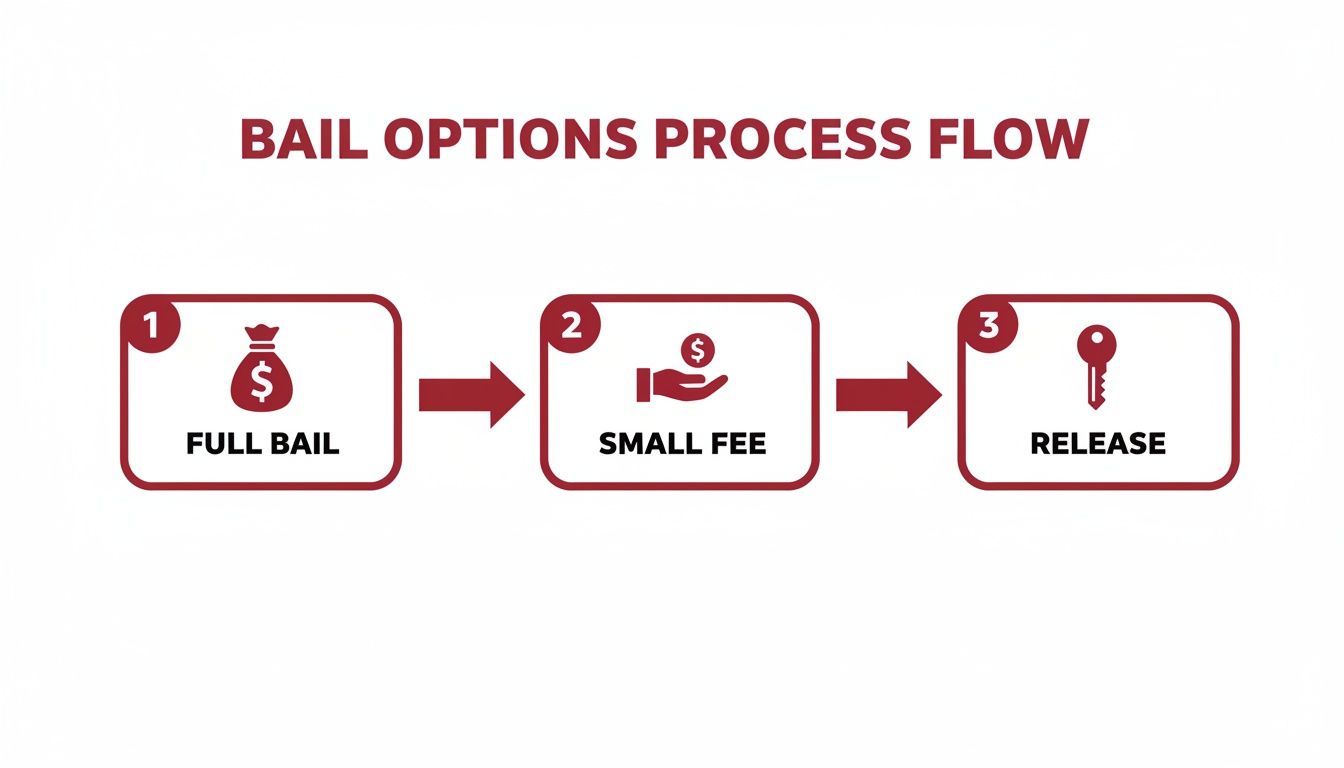
As shown, working with a bail bondsman turns a large cash bail amount into a single, manageable fee to secure a release.
Step 3: We Review the Terms Together
Once we have the defendant's details, we will clearly explain the bail bond agreement. We will cover the non-refundable fee—a percentage of the total bail—and the responsibilities of the person signing for the bond.
This person is called the co-signer or indemnitor.
The co-signer signs the contract with us. By signing, you guarantee that the defendant will appear at all court dates. You also take on the financial responsibility for the full bail amount if they fail to appear.
We ensure you understand every detail before you commit. We will answer all your questions about payment options and a co-signer's responsibilities so there are no surprises. For more details, see how bail bonds work in our detailed guide.
Step 4: We Post the Bond and Start the Release Process
With the paperwork signed and the fee arranged, we act immediately. We post the bond with the jail or court. This step begins the release process.
Our knowledge of local procedures in Cumming, Alpharetta, and Johns Creek means we file everything correctly the first time, avoiding delays.
From here, the release time depends on the jail staff and their processing. Our part—getting the bond posted—is done with urgency. Our focus is on getting your loved one home as quickly as possible.
The Current Debate Over Cash Bail
The cash bail system is a standard part of the justice process in Georgia, but it is also part of a national conversation. Understanding both sides of this debate provides a clearer picture of what cash bail is and why it operates the way it does.The discussion focuses on one question: should a person's freedom before trial depend on their ability to pay?
Arguments for Bail Reform
Critics of the cash bail system argue it can create a two-tiered system of justice. Two people accused of the same crime can have different outcomes based on their financial situation. One person with money can pay bail and go home, while another without the same resources must stay in jail.
Staying in jail can cause someone to lose their job, housing, or child custody. Reform advocates argue that the system punishes poverty, not the alleged crime.
The core idea behind bail reform is that a person's pretrial release should be based on their risk to public safety or flight risk—not on how much money they have.
Because of this, many reform movements promote alternatives to cash payments, such as:
- Release on Recognizance (ROR): Releasing someone based on their written promise to appear in court.
- Supervised Release: The defendant checks in regularly with a pretrial services officer.
- Electronic Monitoring: Using a GPS ankle monitor to track a person's location.
Evidence from groups in this area suggests money is not always the best motivator. The Bail Project, a national nonprofit, reported that 92% of its clients made all their court dates. This data supports the idea that community ties can be as effective as a financial bond. You can find more of their findings in their 2025 annual report.
Arguments for the Current System
Supporters of the current system argue that cash bail is a proven and effective tool. They believe that a financial stake—the risk of losing a significant amount of money—is a powerful incentive for defendants to appear for their court dates.
The concern is that eliminating cash bail could make it harder for courts to ensure people return, which could slow down the justice system. Supporters also emphasize a judge's discretion. They argue that setting a bail amount allows a judge to consider the specifics of each case—like the seriousness of the charge and the defendant's past—and make a tailored decision.
The System in Georgia Today
While the debate continues nationwide, cash bail remains the law in Georgia. For anyone in Forsyth County, Hall County, Cumming, or Alpharetta, knowing how to work within this system is what matters now.
Our job is not to take a side. Our job is to provide fast, professional, and confidential help that operates within the current legal framework. We help families meet the court's financial requirements to get their loved one released as quickly as possible. At One Call Bail Bonds, we focus on providing clear guidance and taking immediate action based on the rules as they exist today.
Your Responsibilities After Release on Bail
Getting out of jail is a significant relief, but it is not the final step. What happens between the day of release and the final court date is as important as posting the bond.
The primary rule is: the defendant must appear for every single court date. This is the core promise a bail bond makes to the court and is a non-negotiable part of the agreement.
The Consequences of a Missed Court Date
Failing to appear in court in Forsyth County or Hall County has serious and immediate consequences. When a defendant misses a court date, the judge issues a bench warrant for their arrest and forfeits the bond.
Here is what happens:
- A New Warrant is Issued: Law enforcement is authorized to arrest the defendant immediately.
- The Bond is Forfeited: The court demands the full bail amount, and our agency is now responsible for paying it.
- The Co-Signer is Responsible: Because the bond was forfeited, the person who co-signed is now legally and financially responsible for paying the full bond amount back to us.
We do everything we can to help you avoid this stressful situation, but the final responsibility to appear rests with the defendant.
Following All Conditions of Release
Besides attending court, a judge may set other conditions that must be followed.
Common release conditions might include:
- Checking in regularly with a pretrial officer.
- Staying within a certain area, like North Metro Atlanta.
- Avoiding contact with specific people.
- Attending mandatory counseling or treatment.
Violating any of these rules can result in the bond being revoked and the defendant returning to jail. This information is for general guidance; consult an attorney for specific legal advice about your case. To learn more about the financial aspects, you can read about if you get bail money back in our article.
The system is based on accountability. Data from organizations like The Bail Project shows most people fulfill their obligations. Their findings show 28% of cases they supported were ultimately dismissed, and defendants maintained a 92% court appearance rate even without a cash bond. Discover more insights about these pretrial release findings. By understanding and meeting your responsibilities, you can navigate the process successfully.
Your Questions Answered: The Bail Bond Process
When dealing with an arrest in Forsyth County, you need clear answers quickly. Here are straightforward responses to the most common questions we hear.
How do I start the bail process?
Just call us. That is the first and most important step.
We are here 24/7 to take your call, answer your questions, and explain what to do next. We can start gathering information over the phone to save time.
What information do you need from me?
To move quickly, we need three pieces of information:
- The full name of the person in custody.
- Their date of birth.
- The jail where they are being held (such as the Forsyth County Jail or Hall County Detention Center).
Having these details ready when you call helps us locate them and start the paperwork immediately.
How long does it take to get someone released?
Our part of the process is fast. We work to post the bond with the court as quickly as possible.
Once the bond is filed, the release timeline is determined by the jail staff and their internal processing. We ensure there are no delays on our end.
What does a co-signer do?
The co-signer (or indemnitor) is the person who signs the bail bond agreement.
By signing, you take on financial responsibility for the bond and guarantee that the defendant will attend all court dates until the case is concluded. It is a serious but essential role in securing someone's release.
If you need immediate help with bail bonds in Forsyth County, our team at One Call Bail Bonds is ready to provide clear guidance and fast, professional service 24/7. Call now to start the process and get your questions answered. https://onecallforsyth.com