
If someone you know has been arrested in Forsyth County or Hall County, their bond hearing is the critical first step toward getting them home. This is not a trial. It is a focused hearing where a judge decides if the accused can be released from jail before their court date. For help with bail bonds in Forsyth County, our agents are available 24/7 to provide fast, clear guidance.
This hearing happens quickly, usually within 48 to 72 hours of an arrest. Its purpose is simple: to weigh the situation and decide if the defendant can be trusted to return for future court dates.
The Purpose of a Georgia Bond Hearing
A bond hearing can feel intimidating, but its goal is straightforward. The judge isn't there to determine guilt or innocence. Instead, they evaluate specific risk factors to set the terms for a potential pretrial release. The speed of this process is critical.
Across Georgia and the rest of the country, many legally innocent people remain in jail simply because they cannot afford to post bail. According to the Prison Policy Initiative, pretrial detention is a significant issue. That's why these hearings are mandated to happen quickly, ensuring a person's freedom is not unfairly delayed.
The Basic Steps of the Process
Knowing what to expect can make a stressful situation more manageable. Understanding the flow of events demystifies the experience and helps you prepare for what comes next. Having a reliable bail bond agent from One Call Bail Bonds ready can make all the difference in navigating the outcome quickly in areas like Cumming, GA.
This chart breaks down the typical journey from the moment of arrest to release.
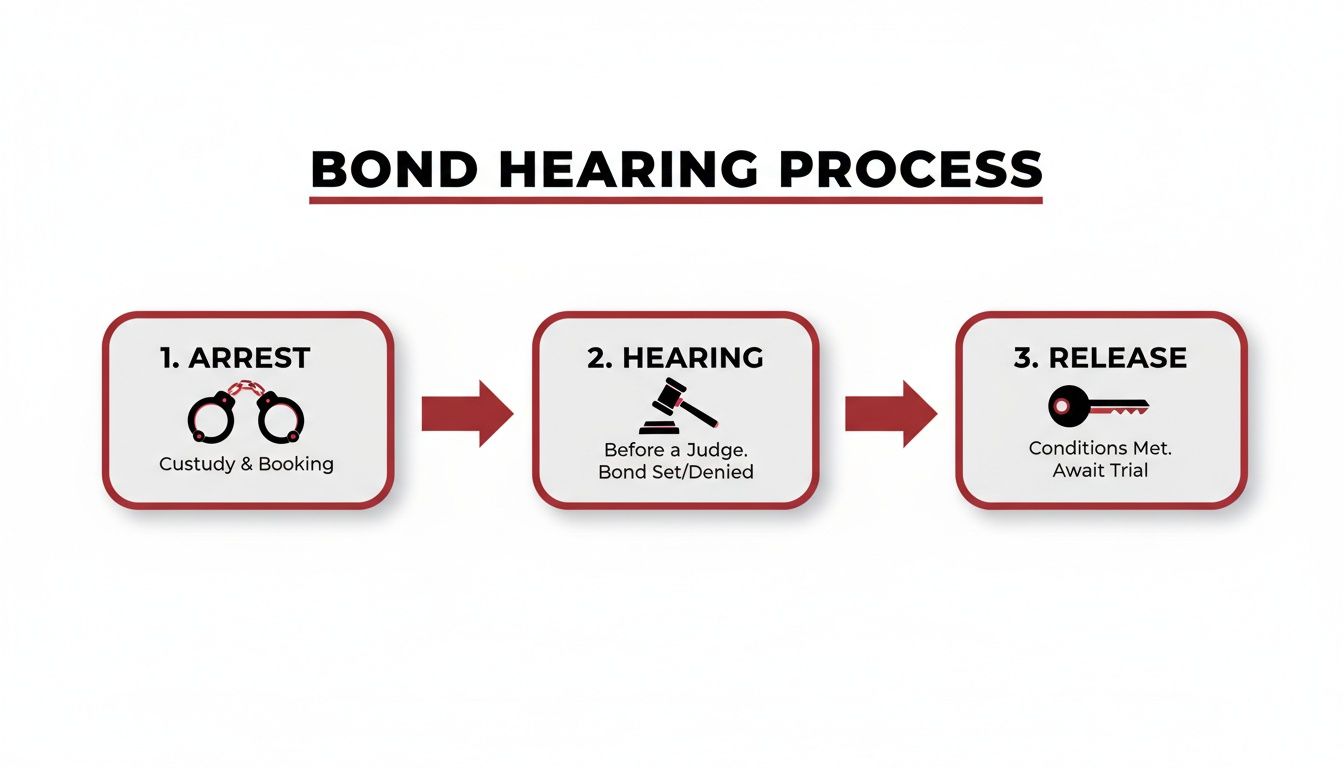
As you can see, the bond hearing is the crucial middle step. It is the moment that determines whether the accused can come home or has to wait in jail until their trial.
Who You Will See in the Courtroom
Walking into a bond hearing, you will see several key people, each with a distinct role. It helps to know who is who before the hearing begins.
Here is a quick rundown of the main participants and what they do.
| Participant | Role and Responsibility |
|---|---|
| The Judge | Presides over the hearing, listens to arguments, and makes the final decision on whether to grant bond, setting the amount and conditions. |
| The Prosecutor | Represents the state (the government). They may argue against bond or for a high bond amount, presenting reasons why the defendant might be a risk. |
| The Defense Attorney | Represents the person who was arrested. Their job is to argue for release on a reasonable bond, highlighting positive factors like community ties. |
| The Defendant | The person who has been charged with a crime. They will be present, either physically in the courtroom or appearing via a video link from the jail. |
| Clerk/Court Staff | Manages the courtroom's administrative functions, including handling paperwork, swearing in witnesses, and recording the proceedings. |
| Family & Supporters | Friends and family members attending the hearing. Your presence can show the judge that the defendant has a strong support system in the community. |
Knowing who is in the room and why they are there helps you follow the proceedings. Our team at One Call Bail Bonds provides a clear, calm overview of what to expect in courts serving Cumming, Alpharetta, and Johns Creek.
Who Is In The Courtroom And What They Do
Walking into a courtroom for a bond hearing can feel intimidating, especially under stress. It helps to know who the key players are and their responsibilities. Once you understand their roles, the entire process becomes less mysterious.

The Key Decision-Makers
At its core, the bond hearing is a conversation between three people who will ultimately decide what happens next. Their arguments and rulings shape the outcome.
- The Judge: The judge is the final authority, responsible for listening to both sides and making an impartial decision based on Georgia law. The judge is the one who will set the bond amount and any special conditions for release.
- The Prosecutor: This attorney represents the state. Their job is to argue for the public's interest. This often means requesting a high bond amount or arguing that bond should be denied if they believe the defendant is a flight risk or a danger to the community.
- The Defense Attorney: A defense attorney's primary goal is to get their client released on the best possible terms. They present evidence and arguments to convince the judge that their client has strong ties to the community, is not a flight risk, and deserves a reasonable bond.
Other Important Participants
Beyond the main legal trio, a few other people in the room play an important part in how the hearing unfolds.
The presence of family and community members can be a powerful, silent testament to the defendant's support system. It shows the judge that the accused has a stable network in areas like Cumming or Alpharetta, which can influence the final bond decision.
The defendant—the person accused of the crime—will be present, though sometimes they appear via a video feed from the jail. While their lawyer does most of the talking, their presence is the reason everyone is there.
Finally, the family, friends, and supporters sitting in the gallery play a quiet but vital role. Simply being there shows the court that the defendant has a strong local support system waiting for them. While you are not directly involved in the legal arguments, your presence matters.
After the hearing, a bail bond agent's role becomes critical. If you are new to the process, it is helpful to understand what a bail bondsman does to make the release happen.
How The Judge Decides On A Bond Amount
When a judge sets a bond amount, it is not an arbitrary number. In Georgia courts, including those in Forsyth and Hall Counties, there is a structured process behind that decision. The judge is essentially weighing two primary risks: is this person a flight risk, and do they pose a danger to the community? The final amount is what the court believes will reasonably guarantee the defendant appears for future court dates.

It is a serious balancing act. The court must protect the public while respecting the defendant's right to be free while their case moves forward—they are presumed innocent until proven guilty. Every decision comes down to the unique details of the case and the person before the court.
Key Factors Considered By The Judge
During the hearing, the judge listens to arguments from both the prosecutor and the defense attorney. They use this information, plus official records, to evaluate a few critical factors.
- The Nature of the Alleged Offense: This is a major factor. More serious charges almost always mean higher bond amounts. The judge must consider the severity of the crime the person is accused of.
- The Defendant's Criminal History: A record of prior arrests or failing to appear for court in the past flags someone as a higher risk. Conversely, a clean record is a positive factor.
- Ties to the Local Community: Strong local roots suggest a much lower flight risk. A steady job in Cumming, family in Alpharetta, or proof of living in Forsyth County for years shows the judge this person is not likely to disappear.
- Potential Danger to the Community: The judge must ask: if this person is released, is anyone at risk? This is especially crucial in cases involving accusations of violence.
A judge’s goal is to find the least restrictive conditions necessary to ensure public safety and the defendant's return to court. Strong community ties are often the most persuasive evidence that a person can be trusted with pretrial release.
Practical Examples of What Matters
It helps to see how these factors play out. For example, a defendant who has lived and worked in Gainesville for 10 years and has family nearby is a much lower flight risk than someone with no local connections.
An attorney might show the judge proof of employment, bring in letters of support, or highlight family responsibilities. Every piece of evidence helps build a picture of a stable, reliable person. This is at the heart of how bail works in Georgia—it is all about demonstrating trustworthiness through real-life factors. Once the judge sets that amount, a bail bond agent can step in and start the release process.
Understanding The Possible Hearing Outcomes
Once all the arguments are presented, the judge makes a decision. A bond hearing can have a few different outcomes, and each one determines what happens next—whether it's calling a bail bond agent or preparing for a longer stay.
Knowing these potential outcomes ahead of time helps you react quickly and effectively as soon as the judge's decision is announced.
Release on Recognizance (ROR)
This is the best-case scenario. A Release on Recognizance, or "ROR," means the judge trusts the defendant enough to release them without any money. It is a decision based on the belief that the person’s ties to the community are strong enough to ensure they will appear for future court dates.
Even though no payment is required, the defendant still signs a written promise to appear for all future proceedings. An ROR is typically granted to people with little to no criminal history who are facing less serious charges.
Surety Bond
A Surety Bond is the most common result of a bond hearing in Georgia. This is where a professional bail bond agent from a company like One Call Bail Bonds steps in. The judge will set a specific bond amount—for example, $10,000. Instead of paying that entire sum, you pay a percentage of it to a bail bond company.
That fee, typically a percentage of the total bond, is non-refundable. In exchange, we post the full $10,000 with the court on your behalf. We take on the financial risk and guarantee to the court that the defendant will appear. If you need to arrange a release in Forsyth County or Hall County, a surety bond is the fastest and most accessible way to get it done.
A surety bond makes release accessible. It allows a family to secure a loved one's freedom for a fraction of the total cost, preventing an unnecessary stay in jail while awaiting trial.
Cash Bond
A Cash Bond requires you to pay the entire bond amount in cash, directly to the court. Using our $10,000 example, you or your family would need to bring that full amount to the jail or the clerk of court's office. The court holds that money as collateral.
As long as the defendant makes every court appearance, the full amount is returned at the end of the case. However, coming up with thousands of dollars on short notice is a significant financial strain for most families, which is why a surety bond is often the more practical option.
Bond Denied
In the most serious cases, the judge may rule Bond Denied. This happens when the charges are particularly severe or if the judge believes the defendant is a major flight risk or a danger to the community.
A "bond denied" ruling means the person is not eligible for release. They will have to remain in custody at the local jail, such as the one in Forsyth County, until their case goes to trial. If this happens, your first call should be to a defense attorney to discuss the next legal steps.
Here is a quick breakdown of what these different outcomes mean.
Bond Hearing Outcomes Explained
| Outcome | What It Means | Next Step |
|---|---|---|
| Release on Recognizance (ROR) | The defendant is released on a written promise to appear in court. No money is required. | Sign the ROR agreement and follow all court-ordered conditions. |
| Surety Bond | The judge sets a bond amount. You pay a percentage to a bail bond agent, who posts the full amount. | Call a bail bond company immediately to start the release process. |
| Cash Bond | The defendant or their family must pay the full bond amount in cash directly to the court. | Arrange to deliver the full cash amount to the jail or clerk of court. |
| Bond Denied | The defendant is not eligible for pretrial release and must remain in jail until their case is resolved. | Immediately consult with a criminal defense attorney to plan the next legal move. |
No matter the outcome, understanding the judge's decision is the first step. From there, you will know exactly who to call and what to do.
What To Do The Moment A Bond Is Set
The moment a judge sets the bond, the clock starts ticking. This is the time to act. Your first move is simple: call a professional bail bond agent who serves Forsyth County, Cumming, or Hall County. That single call sets everything in motion.
You do not need extensive paperwork to get started. An agent can begin the process with just three key pieces of information.
- The defendant’s full legal name
- The jail they are in (e.g., the Forsyth County Jail)
- The exact bond amount the judge set
Having this information ready will speed things up, but call anyway even if you are missing a detail. An experienced bail bond agent can usually find the required information for you.
How A Bail Bond Agent Secures The Release
Instead of trying to come up with the entire bond amount in cash, you work with a bail bond company. You pay a much smaller, non-refundable fee—a percentage of the total bond.
In return, the bail bond agent posts the full bond amount with the court. They take on the financial risk and guarantee the defendant will appear for all court dates. This is the core of how to bail someone out of jail.
This makes getting out of jail fast both accessible and manageable. It frees your family to focus on preparing for court instead of dealing with a major financial burden. The system is designed to allow people to return to their lives and jobs while the case moves forward.
The value of pretrial release goes beyond convenience; it is a fundamental part of due process. Studies have shown that released individuals are more likely to attend their required hearings, underscoring how bail bonds support the legal process. You can learn more about these findings on the importance of pretrial release.
When you work with a local bail bond agent in Cumming, Johns Creek, or Alpharetta, you get an expert who knows the system. They handle the paperwork and deal directly with the jail, turning a chaotic situation into a clear, simple plan. Their professional guidance ensures everything is done correctly, cutting down on delays and helping get your loved one home.
Common Questions About The Bond Process In Georgia

When you are in a stressful situation like this, you need clear, direct answers, not confusing legal jargon. Here are some of the most common questions we receive about bond hearings and the bail process in Georgia.
Our goal is to give you practical information that replaces uncertainty with a straightforward plan. These answers will help you understand your immediate next steps, whether you are in Forsyth County, Hall County, or a nearby community.
How Quickly Can Someone Be Released After Bond Is Set?
As soon as a judge sets the bond, we can begin our work. The actual release timeline depends on two things: how fast you contact a bail bond agent and the processing speed at the specific jail, like the Forsyth County Jail or the Hall County facility.
We ensure all paperwork is filed correctly and immediately to prevent delays. While every jail has its own pace, release usually happens within a few hours after we have officially posted the bond. The key is to act the moment you have the bond amount.
What Information Is Needed To Start The Process?
Having a few key details ready helps us move much faster. To start the bail bond process, we typically need:
- The defendant’s full legal name
- Their date of birth
- The jail they are in (e.g., Forsyth County, Hall County)
- The bond amount set by the judge
Even if you are missing some of this information, call us. Our agents can track down the necessary details to begin the release process.
Do not let missing information stop you from making the first call. An experienced bail bond agent has the resources to quickly find detention details and bond amounts, saving you critical time and stress.
What Are A Co-Signer's Responsibilities?
A co-signer, also called an indemnitor, is an essential part of the surety bond process. When you co-sign a bail bond agreement, you are making a serious promise. You are financially guaranteeing that the defendant will appear for every single court date.
If the defendant fails to appear in court, the co-signer becomes responsible for paying the full bond amount to the court. It is a significant commitment, and we always take the time to ensure you understand it completely before you sign anything.
Can I Arrange A Bail Bond Over The Phone?
Yes. We designed our process to be as straightforward and discreet as possible. You can handle nearly everything over the phone—from the first call and discussing payment options to completing most of the paperwork electronically.
Our service is fast and convenient. This allows you to arrange for a release from anywhere, whether you are at home in Cumming, at work in Alpharetta, or even out of state.
What Happens If Someone Misses A Court Date?
Missing a court date is a serious matter with immediate consequences. The judge will almost certainly issue a bench warrant for the defendant's arrest, and the bail bond will be forfeited. This means the entire bond amount becomes due.
If you are the co-signer, we will contact you to help locate the defendant. It is crucial to contact your bail bond agent and a defense attorney right away if there is any possibility of an issue with making a court appearance. This information is for general purposes and is not legal advice.
When you need fast, professional guidance, One Call Bail Bonds is here 24/7. If you need help in Forsyth County, Hall County, or the surrounding North Metro Atlanta area, call us now for clear steps to secure a release. You can start the process over the phone by visiting https://onecallforsyth.com.