
Being released on bond means your loved one can leave jail while the case is still pending because a bail bond company guarantees they’ll come back to court, usually for a 10% non-refundable fee instead of paying the full bail amount upfront. If bail is $10,000, that usually means paying $1,000 to the bondsman, who then takes responsibility for the full amount if the defendant doesn’t appear.
If you’re reading this because you just got that late-night call from the Forsyth County jail, take a breath. You do not need to know every legal term right now. You need to know what to do next, what this phrase means, and how to move fast without making expensive mistakes.
Families in Cumming, Dawsonville, Alpharetta, and Suwanee usually ask the same thing first: “Can we get them out tonight?” In many cases, yes, if bail has been set and you have the basic information ready. The legal side matters, but the immediate priority is simple. Find out the bail amount, confirm where the person is being held, and start the bond process correctly.
When people hear “released on bond,” they often think the case is over. It isn’t. It means the person is out of jail, but still fully tied to the court’s rules.
The Urgent Call and Your First Steps
The call usually comes at the worst time. It’s late, you’re half asleep, and all you catch is “I’m in jail” and “they said I can bond out.” That moment rattles people. I’ve seen calm, organized families freeze because they don’t know if they should call the jail, call a lawyer, or drive somewhere immediately.
Start with the basics. Don’t argue facts of the case over the phone. Don’t guess. Get the person’s full legal name, date of birth if you can, where they’re being held, and whether bail has already been set. If the arrest happened in Forsyth County or nearby North Georgia, those details are what move things forward.
What to do first
- Confirm the jail location. Make sure they’re in Forsyth County or Hall County custody and not in another agency’s hold.
- Ask whether bail has been set. If it hasn’t, release can’t happen until the court or magistrate sets the bond.
- Write down the charge. A DUI, probation issue, misdemeanor, felony, or warrant situation can affect the process.
- Keep your phone on. Once the process starts, delays often happen because nobody answers follow-up calls.
- Read a practical arrest guide. If you need a calm checklist right now, use this step-by-step guide on what to do when someone gets arrested.
What not to do
A lot of families lose time by doing the wrong thing first.
- Don’t panic-drive to the jail unless you’ve been told that’s necessary.
- Don’t send random money to anyone before you understand whether it’s a cash bond or a surety bond.
- Don’t assume release is automatic just because someone says “I got a bond.”
You need a plan, not motion. Fast jail release starts with accurate information, not guesswork.
What Released on Bond Really Means in Forsyth County
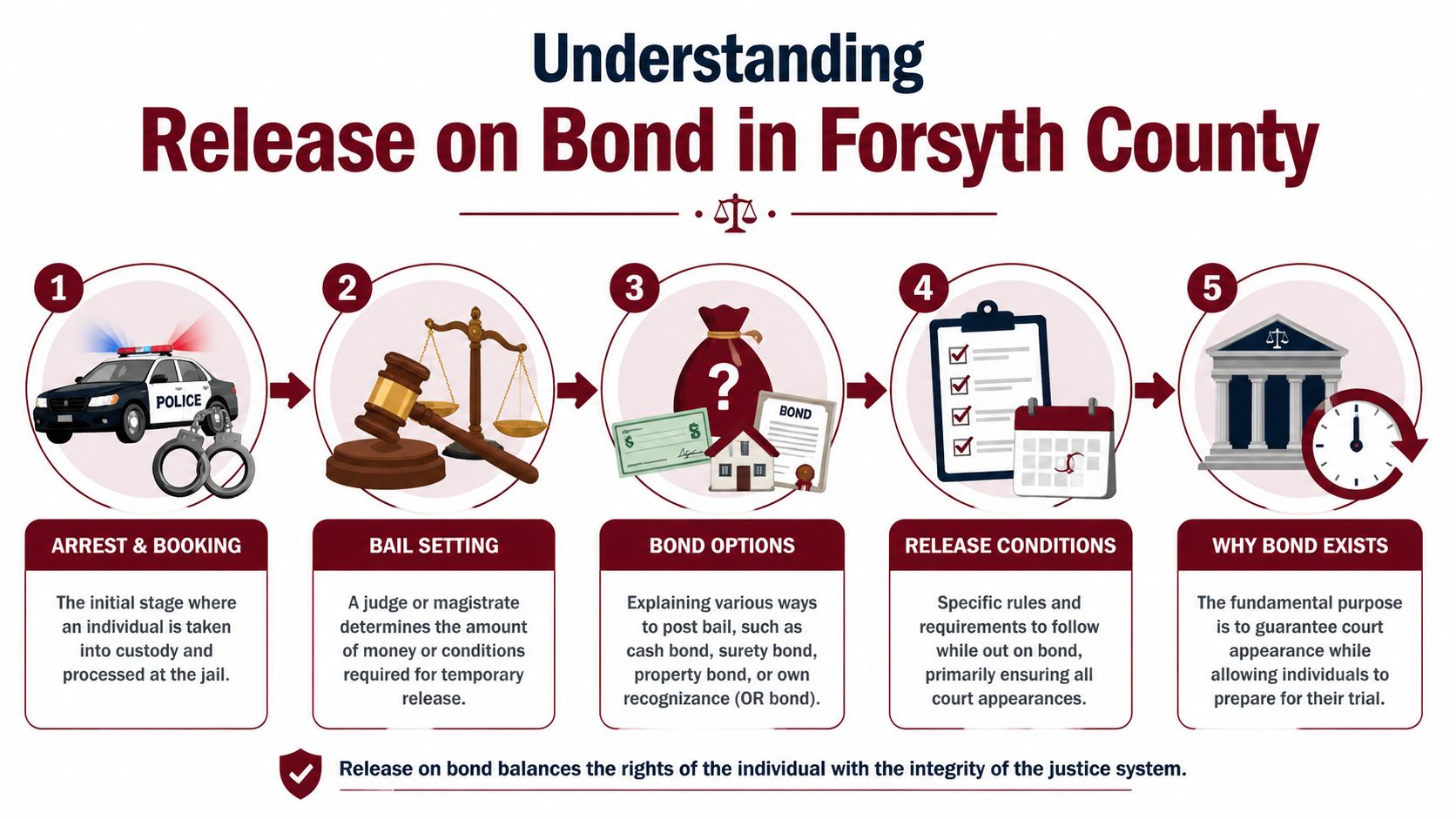
A release on bond means your family member is allowed out of jail before trial because the court accepted a financial guarantee that they will come back and follow the rules.
That is the plain meaning.
The charge is still active. The case is still moving. The court is merely allowing the person to wait for the next court date outside the jail instead of inside it.
The court sets the bond amount. A bondsman does not lower it or make it disappear. If you use a bondsman, you pay a fee for the service, and the bondsman guarantees the full bond to the court. If you want a clearer breakdown of that arrangement, read this explanation of how a surety bond works.
What families usually get wrong
Families often hear the word “bond” and assume the money comes back later like a deposit. With a surety bond, that is usually wrong. The fee paid to the bondsman is generally the cost of getting the person released. It pays for the risk and the work involved in posting the bond.
Here is the practical example. If bail is set at $10,000, a qualified bondsman may be able to post that bond after collecting the required fee and completing the paperwork. Your family does not usually hand the full $10,000 to the jail in a surety bond situation.
What it means in real life in Forsyth and Hall County
For worried families, “released on bond” means four things right away:
- The person can leave custody once the bond is posted and the jail finishes release processing.
- Someone may need to co-sign and accept financial responsibility.
- The person must show up to every required court date.
- The release can come with conditions, such as no alcohol use, no contact with someone involved in the case, drug testing, or travel limits.
That last part matters more than families expect. A person can be out of jail and still end up back in custody fast if they break bond conditions.
What you should understand right now
In Forsyth County and Hall County, the phrase shows up after booking, bond approval, and release processing. It does not mean the case is over. It means the court approved temporary release under specific terms.
So if someone tells you, “He was released on bond,” the practical translation is simple. He is out of jail for now, and the clock has already started on court dates, bond conditions, and responsibilities.
Understanding Your Release Options Cash Bond vs Surety Bond
You get the call, hear the bond amount, and the first question is simple. Do we need all the money tonight, or is there another way to get them out?
In Forsyth County and Hall County, families usually choose between a cash bond and a surety bond. Make that choice carefully. The wrong move can lock up money you need for groceries, rent, a lawyer, or the next emergency.
If you want the full breakdown of the bond company’s role, read this explanation of how a surety bond works. Here’s the plain version you need right now.
Comparing Release Options
| Feature | Surety Bond (Bail Bondsman) | Cash Bond |
|---|---|---|
| Upfront payment | You usually pay a percentage fee to the bondsman | You pay the full bail amount to the court |
| Refundable | The fee is generally non-refundable | Cash bond may be refundable depending on the case result and court deductions |
| Who guarantees appearance | The bondsman guarantees the full bail amount | You or your family put up the full amount directly |
| Best for | Families who need a faster, more affordable path to release | Families who can access the full amount right away |
| Risk to co-signer | The co-signer accepts financial responsibility if terms are broken | The person posting cash puts the full amount at risk if court rules are broken |
| Speed in real life | Often faster because you do not have to produce the full bond amount in cash | Can work well if you already have the funds available with no delay |
Here is the practical difference. If bond is set at $7,500 and you choose cash bond, you need $7,500 available to post with the court. If you choose a surety bond, you usually pay the bondsman’s fee and complete the paperwork, and the bondsman posts the full bond.
That matters at 11:30 p.m. on a Friday.
A third option you may hear about
You may also hear the term own recognizance, or OR release. That means the court lets the person out without paying bond, based on a promise to return to court.
Do not build your plan around that. Judges decide OR release case by case, and many families in Forsyth and Hall lose time waiting on an outcome that never comes. The National Institute of Corrections explains the range of pretrial release decision options, including release on recognizance, unsecured bond, and secured bond.
My advice for stressed families
For working families trying to get someone out fast, a surety bond is usually the smarter option. It keeps your full cash reserve in your pocket and gets an experienced bondsman involved who can help you handle the paperwork, timing, and jail procedures without confusion.
Cash bond makes sense if you already have the full amount available and you are comfortable tying it up.
Do not waste precious time chasing online promises that every case qualifies for no-collateral approval. Some do. Some do not. The answer depends on the charge, bond amount, court history, local hold issues, and who is willing to co-sign. In Forsyth and Hall County, the fastest families are the ones who stop guessing, get the bond amount confirmed, and choose the release option they can complete tonight.
The 24-Hour Bail Bonds Process Step by Step
When families search for 24 hour bail bonds near me, they’re not looking for theory. They want to know how this gets done tonight. The process is usually simpler than people expect, but it works faster when you’re organized.
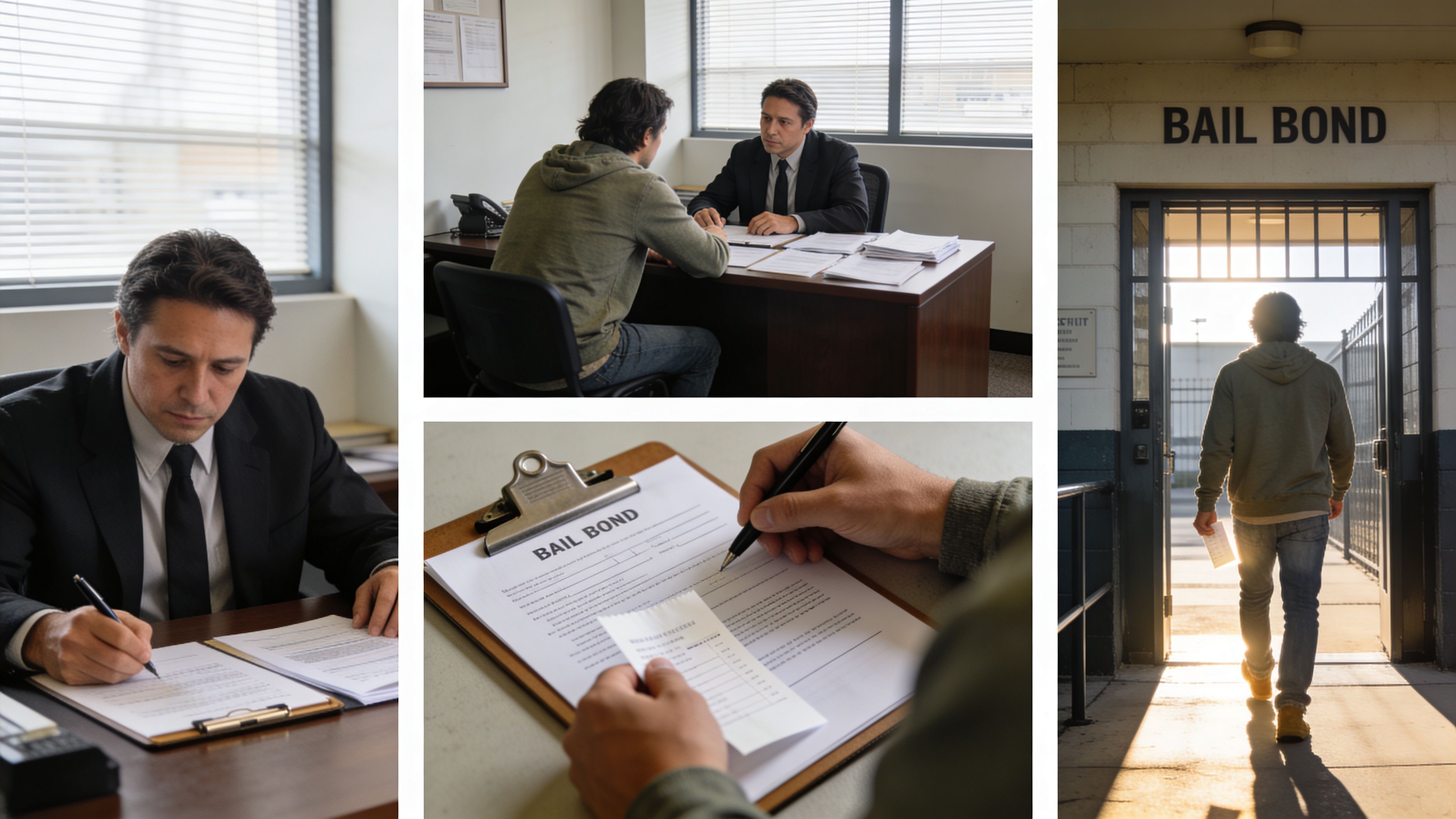
Step one is the phone call
Call as soon as you know where the person is being held. Don’t wait until morning if the goal is emergency bail bonds or fast jail release.
You’ll usually need to provide:
- The defendant’s full name
- Date of birth, if you know it
- The jail or agency holding them
- The charge or warrant information
- The bail amount, if it has already been set
If you don’t have every detail, that’s okay. Give what you know and get the rest confirmed.
Step two is review and approval
A bondsman reviews the case and decides whether to write the bond. At this stage, people find out whether collateral is needed, whether a co-signer is required, and what documents need to be signed.
Some cases move cleanly. Some don’t. A DUI bail may be straightforward. A warrant issue, probation hold, or higher-risk charge may require more review. The key is speed with accurate facts.
The fastest release usually comes from families who answer their phone, send documents quickly, and don’t leave blanks in the paperwork.
Step three is paperwork and payment
Once approved, you handle the indemnity paperwork and the premium payment. In many cases, a lot of this can be handled quickly so the bondsman can get the bond posted without wasting hours.
Have these ready if asked:
- Government ID
- Basic employment or residence information
- Defendant relationship details
- Any requested supporting documents
- Payment method
Step four is posting the bond
After the paperwork is complete, the bondsman posts the bond with the jail or court. That’s the critical action that allows the release process to begin.
This is the part families misunderstand most. Posting the bond does not mean the person walks out instantly. Jail staff still have to process the release. That includes internal checks, final paperwork, and discharge procedures.
Step five is waiting smart
Once the bond is posted, your job is patience and availability. Don’t keep calling every ten minutes. Do stay reachable in case the jail or bondsman needs something else.
If you’re in Cumming, Dawsonville, Alpharetta, Suwanee, or another nearby North Georgia area, a local bondsman usually understands the local rhythm better than an out-of-area service. That matters when every hour feels long.
Your Responsibilities After Being Released on Bond
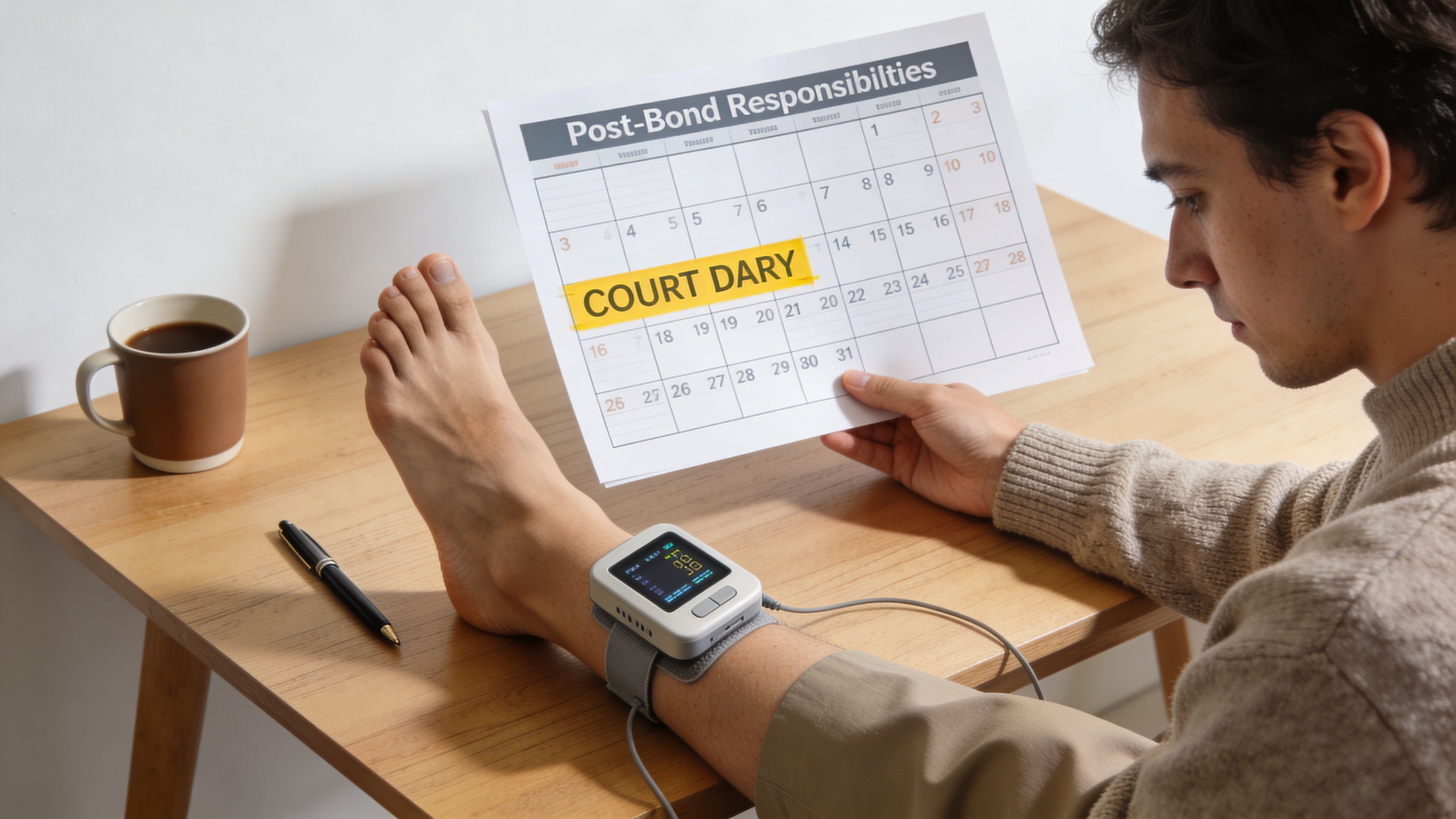
Once your person is out, the clock shifts from release to compliance. In Forsyth and Hall County, the families who avoid trouble are the ones who treat bond paperwork like a live file, not a closed case.
Released on bond means the defendant is out of jail under court-ordered conditions. The case is still active. The judge still has control. The bondsman still has a stake in whether that person follows the rules and shows up.
The rules that matter most
Start with the one rule that causes the biggest problems. Show up for every court date, on time, with the right courtroom and the right county confirmed in advance.
After that, follow every condition listed on the bond or release order. Common ones include:
- Keep in touch with the bondsman if you were told to check in
- Do not get arrested again
- Follow no-contact orders exactly as written
- Stay inside any travel limits set by the court
- Complete classes, treatment, testing, or supervision if the judge ordered them
Do not guess about any of this. Read the paperwork. Save a photo of it on your phone. Put every date into your calendar before the first night home is over.
What co-signers need to do right away
If you co-signed, stay involved. Your name and money are tied to this bond.
That means you need to keep track of court dates, answer calls from the bondsman, and speak up fast if the defendant changes address, changes jobs, swaps phone numbers, or starts talking like court does not matter. Waiting usually makes the problem harder and more expensive to fix.
A good routine keeps families out of panic mode. Use one folder for bond papers, court notices, payment records, and attorney information. Set calendar reminders a week before court, the day before court, and the morning of court.
Bond gives someone a chance to keep working, help their family, and prepare for court. It does not pause the case.
A simple compliance checklist
| Task | Why it matters |
|---|---|
| Confirm every court date | Date changes, room changes, and county mix-ups cause missed appearances |
| Keep bond papers handy | You may need the case number, conditions, or court location fast |
| Report changes quickly | The bondsman and attorney cannot help if they do not know what changed |
| Follow every restriction | Judges expect compliance, not excuses |
If you are worried about what happens if someone slips up, read our guide on missing a court date while out on bond. The best move is always early action, before a small mistake turns into a warrant.
What Happens if You Miss a Court Date
Missing court is where small mistakes turn into big problems. If a defendant fails to appear, the issue usually moves fast and gets expensive.
When a defendant doesn’t show up, bond forfeiture is triggered. That means the bondsman becomes legally obligated to pay the court the full bail amount. Bondsmen then work to locate and return the defendant to custody, often using recovery agents or skip tracers. National failure-to-appear rates average between 15% and 20% depending on the jurisdiction and charge, according to this discussion of bond forfeiture and recovery work.

What usually happens next
The chain of events is usually straightforward:
- The court records the failure to appear
- A warrant may be issued
- The bond is put at risk or revoked
- The co-signer’s financial exposure gets real
- The bondsman starts trying to find the defendant
This is why ignoring a missed date is a terrible strategy. Hoping it blows over usually makes it worse.
The right move if court was missed
Act immediately. If there was a mistake, confusion, transportation problem, or medical issue, start addressing it right away. Don’t hide from the bondsman. Don’t tell the family to “wait and see.”
Use a practical guide like what happens if you miss court so you understand the usual consequences and next steps. Then communicate with the right people as fast as possible.
A missed court date doesn’t become smaller by waiting. It becomes more expensive, more urgent, and harder to fix.
Your Urgent Questions Answered About Bail Bonds
How much do you pay to get someone out on bond
Usually, a surety bond requires a 10% non-refundable fee based on the bail amount. The exact example already covered earlier is the easiest way to think about it. Higher bond amounts mean higher fees. Whether collateral is required depends on the case and the risk.
How long does jail release take after bond is posted
There isn’t one fixed answer. Release depends on when bail is set, how fast paperwork is completed, how busy the jail is, and whether there are holds or other issues. The best way to speed it up is simple. Have accurate information, respond quickly, and don’t leave the co-signer paperwork hanging.
What information do I need to start the process
You’ll want the basics ready:
- Defendant’s legal name
- Date of birth if available
- Jail location
- Charge information
- Bail amount if already set
- Your identification as co-signer
If you don’t know everything, start with what you have. Waiting for perfect information usually slows release.
Can someone get out on bond for a DUI
In many situations, yes. DUI bail is common, but release timing can depend on the local process and whether other issues are involved. If there’s an accident, hold, warrant, or probation problem attached, the process can get more complicated.
Are affordable bail bonds and no collateral bail bonds always available
No. Sometimes a bond can be written without collateral. Sometimes it can’t. Anyone promising that every case is “no collateral” is telling you what you want to hear, not what the file supports.
What if there’s a warrant
Warrant assistance starts with finding out whether the warrant is active and which court or agency is involved. Don’t assume all warrants can be handled the same way. Some situations can be addressed quickly. Others require a surrender plan, a court appearance, or both.
Is being released on bond the same as being found not guilty
No. Families often misunderstand this point. Bond only changes custody status. The criminal case is still active. The person is out of jail, but they still have to answer the charge in court.
What does released on bond mean for the family member who signed
It means you took on real responsibility. You are tied to the defendant’s compliance, attendance, and communication. If the defendant disappears or ignores court, your stress becomes financial stress too.
What should I do right now if someone I care about is in the Forsyth County or Hall County jail
Move in this order:
- Confirm where they are
- Find out if bail has been set
- Get the full name and charge
- Be ready to sign and pay quickly
- Stay reachable until release is complete
If you need immediate help with a loved one in jail in Cumming, Forsyth County, Hall County, or nearby North Georgia, One Call Bail Bonds is available 24/7 to help you start the release process, answer your questions clearly, and move fast when time matters most.