
That call usually comes at the worst time. Late at night. During dinner. While you’re at work. A spouse, parent, sibling, or friend says they’ve been told they were indicted, or worse, they’ve already been picked up in Forsyth or Hall County and nobody knows what that word means.
Most families hear indicted and assume it means conviction, prison, or some immediate worst-case outcome. That’s not what it means. It does mean the case is serious, and it usually means you need to move fast because arrest, booking, bail, and arraignment can follow quickly.
If you’re in Cumming, Dawsonville, Alpharetta, Suwanee, or anywhere around North Georgia, this isn’t the moment to freeze. It’s the moment to get clear on the process and focus on the practical question that matters most right now: how do we avoid extra jail time and secure release as fast as possible?
The Phone Call Everyone Dreads
A family member says, “They told me I’ve been indicted.” Another call comes from the jail. Someone else heard there may be a warrant. In that moment, individuals aren’t asking legal theory questions. They want to know three things fast:
- Is this the same as being found guilty
- Can they be arrested right away
- What do we need to do to get them out
That’s the right mindset. Stay calm, but get moving.
In Forsyth and Hall County, the practical danger isn’t just the charge itself. It’s the downtime that follows if nobody acts quickly. A person may be arrested with little warning, taken through booking, held while the court process starts, and left waiting while the family scrambles for answers. That delay is what makes a bad situation worse.
What families get wrong first
People often treat an indictment like a final outcome. It isn’t. They also assume they’ll get plenty of notice before anything happens. That’s a mistake. Sometimes the first real notice is an arrest, a surrender demand, or a call from detention.
The word is legal. The problem is practical. Someone may need bail help now, not next week.
If you searched what does it mean to be indicted, you’re already asking the right question. The next step is to understand what the indictment does, and what it doesn’t do, so you can stop panicking and start making smart decisions.
What an Indictment Is and What It Is Not
An indictment is a formal accusation from a grand jury. It means the grand jury found probable cause, not guilt. According to Attorney at Law Magazine’s explanation of indictment basics, probable cause in this context means a greater than 50% likelihood based on the evidence presented, while guilt at trial requires proof beyond a reasonable doubt, described there as over 99% certainty.

That difference matters. A lot.
Think of it like approval to move forward
A simple way to understand it is this. An indictment is like a manager approving a project to move to the next stage because there’s enough there to justify more action. It is not the final review. It is not the completed result. It is not proof the project was right.
That’s how criminal cases work too. The grand jury is not deciding whether the accused should be convicted. It’s deciding whether the case can proceed.
What it is
A formal written accusation
It tells the court that a grand jury believes there’s enough basis to bring felony charges forward.A gateway to prosecution
The case can move into the next phase, including arraignment and bail issues.A serious development
In practice, it usually means the state is pursuing the case with real intent.
What it is not
Not a conviction
Nobody should talk like the case is over just because there’s an indictment.Not proof beyond a reasonable doubt
The bar at trial is much higher than the bar for indictment.Not automatic jail time
A person may still be eligible for release, and many people are released before trial.
Practical rule: Don’t let the word “indicted” scare you into inaction. It signals urgency, not hopelessness.
Families also confuse an indictment with an arrest. Those are related, but they are not the same event. A person can be indicted before they’re arrested on that indictment. That’s why some people are blindsided.
Here’s the plain answer to what does it mean to be indicted: it means the government has cleared an early procedural hurdle in a felony case. The legal fight is still ahead. Your immediate job is to deal with the custody and release side before unnecessary jail time stacks up.
How a Grand Jury Issues an Indictment in Georgia
In Georgia felony cases, the grand jury process happens behind closed doors. Prosecutors present evidence. The defense usually isn’t in the room arguing the other side. The proceeding is secret, which is one reason indictments can feel sudden and confusing to families.
According to Chris Earley’s overview of what being indicted means, a grand jury is typically 16 to 23 citizens convened secretly, and an indictment means they voted a true bill after hearing the prosecutor’s evidence. That same source notes that, in state systems, the required concurrence threshold is met in over 95% of prosecutor-requested cases.
What the grand jury is doing
The grand jury is not deciding punishment. It is not deciding sentence. It is not hearing a full defense trial.
It’s answering one narrow question: is there enough basis to formally charge this person with a felony and move the case forward?
That’s why families should not read too much into the indictment itself. The process is one-sided by design, and the standard is low compared with trial.
Two terms you need to know
| Term | What it means |
|---|---|
| True bill | The grand jury approves the indictment |
| No bill | The grand jury declines to indict |
A true bill means formal felony charges proceed. A no bill means that round stops there, though the broader legal consequences depend on the case and how prosecutors respond.
Why this matters in Forsyth and Hall County
For serious charges in Georgia, indictment is often the point where the case sharpens. Things become less theoretical and more immediate. If you’re trying to understand the local sequence after an arrest, what happens after an arrest in Forsyth County, Georgia gives a practical look at what families usually face on the ground.
Misdemeanors often move differently. Felony cases are where indictment becomes a major event, and that’s why a call about an indictment should never be treated like routine paperwork. It can quickly turn into a warrant problem, a surrender issue, or a same-day detention problem.
The Critical Timeline From Indictment to Arraignment
What throws families off isn’t just the indictment itself. It’s the sequence that follows. A person hears they’ve been indicted, then there’s talk of a warrant, then an arrest, then booking, then a first court date. If you don’t understand the order, you lose time.
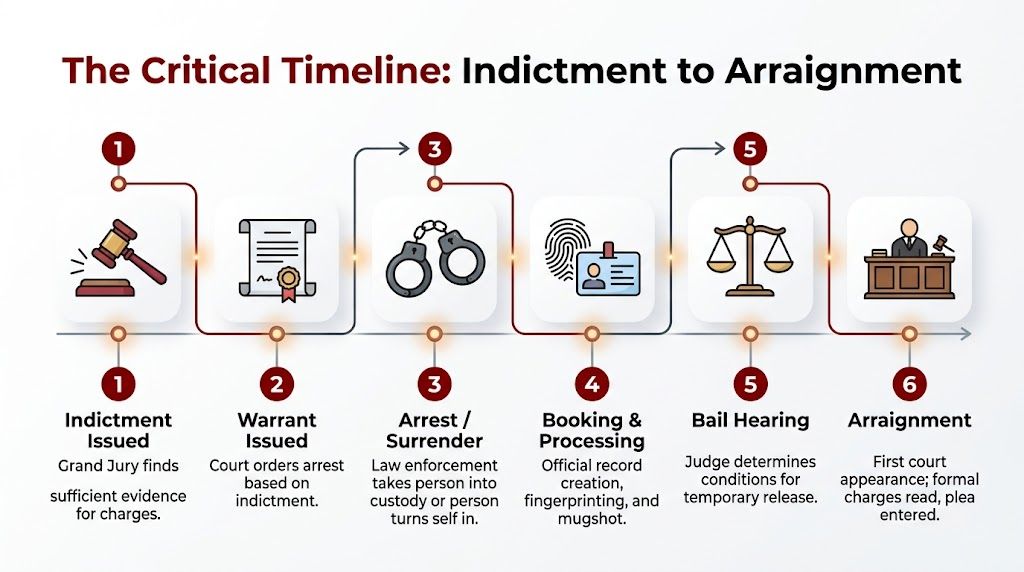
In North Georgia, this discussion of post-indictment arrest timing in Forsyth County states that over 1,200 felony indictments were reported by Forsyth County Superior Court in 2025, and 68% resulted in arrests within 72 hours. That same source says this often drives bail bond demand during evenings and weekends, when courts are closed.
The usual sequence
Indictment issued
The grand jury returns a true bill.Warrant follows
In many cases, the indictment leads to an arrest warrant.Arrest or surrender
Law enforcement may pick the person up, or the person may need to turn themselves in.Booking and processing
Fingerprints, paperwork, holding, and jail intake begin.Bail decision or bond process
Release becomes the immediate priority.Arraignment
The formal reading of charges and plea entry happens after that initial custody stage.
Why families get blindsided
A lot of people assume indictment means a court date will arrive calmly in the mail and everyone will have time to prepare. Sometimes that happens. Sometimes it doesn’t.
If there’s an indictment, treat the case like arrest could happen on the court’s schedule, not yours.
That’s especially important for evenings, weekends, and holidays, when families start searching for 24 hour bail bonds near me, emergency bail bonds, or fast jail release Forsyth County because they suddenly realize the clock doesn’t stop when offices close.
If you need a plain-language explanation of the court appearance that comes after the initial custody scramble, what happens at an arraignment hearing helps connect that next step.
Your Immediate Next Steps in Forsyth and Hall County
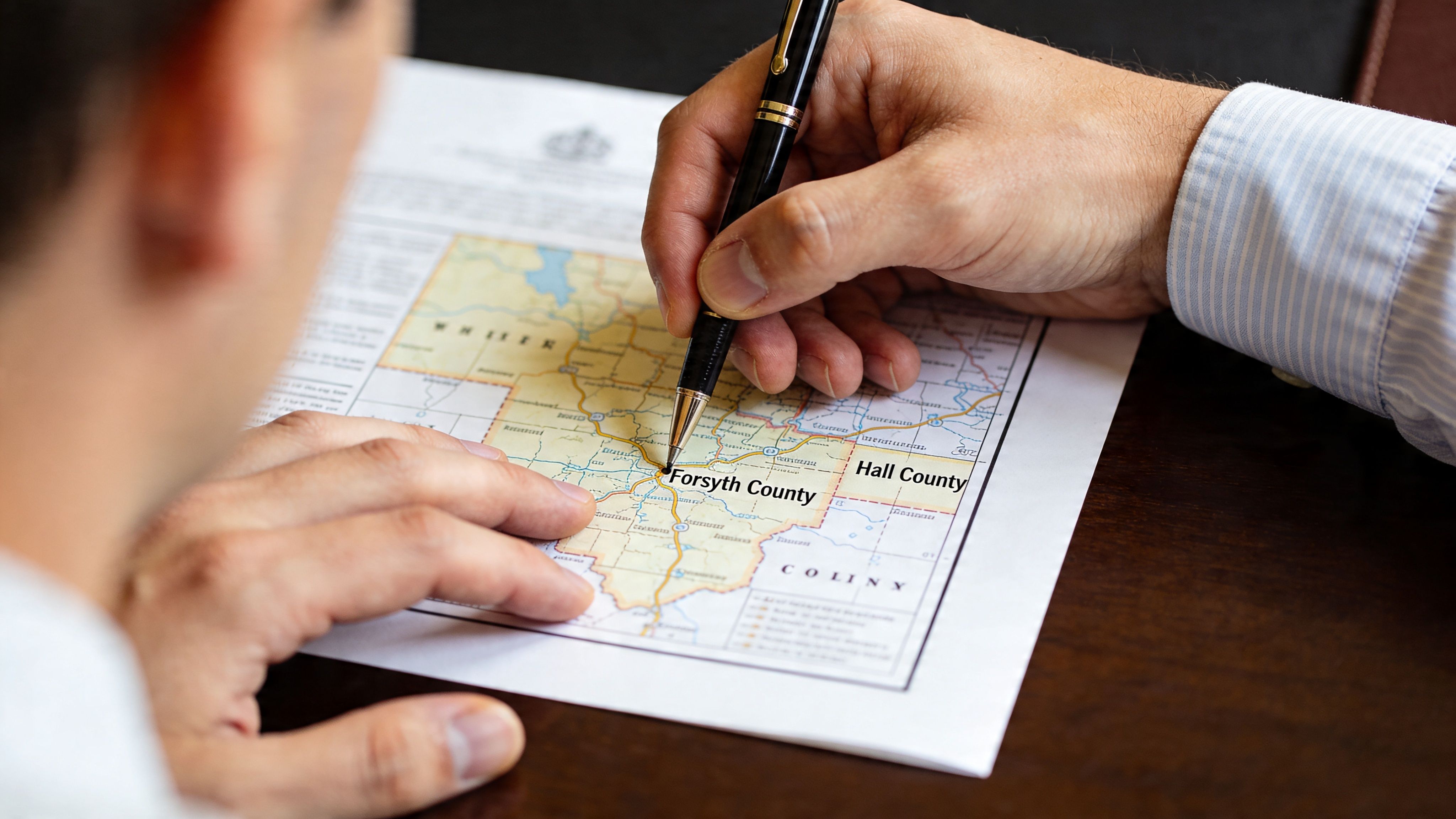
If you’ve learned about an indictment, don’t sit on it. The worst move is waiting to “see what happens.” What happens is often an avoidable arrest at the worst possible time.
According to Cornell Law School’s Wex entry on indictments, upon notice of indictment, call a bondsman immediately. That source explains that indictment triggers arraignment, where the defendant pleads, posts bail, or faces a detention hearing, and notes that action can support release motions under O.C.G.A. §17-6-1.
What to do right away
Confirm the court and county
Forsyth and Hall County procedures overlap in broad ways, but details matter. Get the correct county first.Find out whether a warrant has been issued
Don’t assume the absence of an arrest means the person is in the clear.Gather identifying information
Full legal name, date of birth, booking status if known, charges if known, and where the person may be held.Prepare for fast bail action
If arrest happens, every minute you delay is more jail time.
What not to do
Some families make the problem worse by calling too many people before they verify the basics. Others wait until morning because they think no one can help overnight. That’s a bad gamble in any urgent bail situation.
Avoid these mistakes:
Don’t ignore a notice
Indictments don’t disappear because a person is nervous.Don’t rely on rumors
“My cousin heard there may be a warrant” is not a plan.Don’t wait for business hours
Jail doesn’t work banker’s hours, and neither should your response.
A fast, calm response usually saves more trouble than a dramatic one.
If you’re in Cumming, Dawsonville, Alpharetta, Suwanee, or nearby, think in terms of warrant assistance, how to post bail, and inmate release Forsyth County. This is not the time for passive hope. It’s the time for immediate verification and release planning.
Securing Fast Jail Release with a 24-Hour Bail Bondsman
Once arrest happens, the focus shifts from legal vocabulary to logistics. You need to know where the person is, what bond has been set, and how to move the release process without wasting hours.

A bail bond exists to help secure release when the court sets bail and the family doesn’t want to tie up the full amount directly with the court. In practical terms, this is why people search for bail bonds near me, 24 hour bail bonds Cumming, bail bonds Forsyth County, affordable bail bonds, or DUI bail when the phone rings after hours.
What the process usually looks like
The process is straightforward when the right information is ready.
| Step | What you do |
|---|---|
| Call immediately | Start the release process as soon as you learn the person is in custody |
| Provide case details | Share the person’s name, county, charges if known, and jail location |
| Review bond terms | Understand what’s required to move forward |
| Sign paperwork | Complete the bond agreement |
| Wait for jail processing | Release depends on the jail’s internal timing after the bond is posted |
Why local knowledge matters
A bondsman who understands Forsyth County and Hall County procedures is usually more useful than someone reading from a script. Families need someone who knows how local booking, jail release, and court scheduling tend to work in real life.
That matters for:
Evening arrests
Delays often grow after court staff leave for the day.Weekend pickups
Families frequently need emergency bail bonds at the exact times they can’t get easy answers elsewhere.Charge-specific stress
DUI bail, felony bond questions, and warrant-based arrests all create different worries, even when the basic bond process is similar.
What a good bail conversation should cover
You should get plain answers, not legal theater.
Ask about:
- what information is needed to start
- whether collateral may be required
- what the release sequence looks like
- where the person is being held
- what the family should do while waiting
If you want a simple explanation of the role itself, what a bail bondsman does is a useful starting point.
The main point is simple. When someone has been indicted and then taken into custody, speed matters. Clear communication matters. A 24-hour response matters. That’s how you shorten the time between panic and release.
Urgent Questions About Indictment and Bail in Georgia
Can you get bail after being indicted
Yes, many people can. An indictment is an accusation, not a conviction. Bail depends on the charge, the court, the person’s circumstances, and whether the judge allows release.
Does an indictment mean the person is guilty
No. It means the case has been formally approved to proceed. The actual fight over guilt happens later.
Can someone be indicted without knowing it
Yes. Families are often caught off guard because the grand jury process is secret, and arrest can follow after the indictment rather than before the person fully understands what’s happening.
What should I do first after learning about an indictment
Handle the custody issue immediately. Confirm the county, check whether there’s a warrant or active detention, gather the person’s identifying details, and get release help moving right away.
The first useful move is almost never arguing facts over the phone. It’s finding out where the person stands in the process and how to get them out.
How long does it take to get out after bond is posted
Release timing depends on the jail’s booking and discharge process. Some releases move faster than others. The key is getting the bond process started quickly so the jail’s internal clock starts running sooner.
Do I need collateral for a bail bond
Sometimes yes, sometimes no. It depends on the case, the bond, the risk level, and the details of the agreement. Ask early so there are no surprises.
What information helps start the bond process
Try to have:
- the defendant’s full legal name
- date of birth
- jail or county location
- charges if known
- booking number if available
- your contact information
- any paperwork already provided by the jail or court
Is this different for DUI bail or warrant arrests
The emotional pressure feels different, but the need for quick action is the same. DUI bail, felony bond, and warrant-related detention all require fast verification and clean paperwork if you want a fast release.
What does it mean to be indicted in plain English
It means a grand jury formally accused the person of a serious crime and allowed the case to move forward. It does not mean they’ve been convicted. It does mean you should treat arrest and bail as urgent.
If your family needs immediate help after an indictment, arrest, warrant issue, or jail booking in Forsyth County, Hall County, Cumming, Dawsonville, Alpharetta, or Suwanee, contact One Call Bail Bonds. They provide 24/7 help, clear guidance, and fast action when you need answers now.