
When you cosign a bail bond in Forsyth County, GA, you are entering a serious financial agreement to help get someone released from jail. It is a commitment with clear responsibilities.
As a cosigner, you make two primary promises. First, you guarantee the defendant will appear for all required court dates. Second, you accept full financial responsibility for the entire bail amount if they fail to appear. This action secures their release but places your own finances at risk.
What It Really Means to Be a Cosigner
Cosigning a bail bond is a contract between you, the bail bond company, and the court. You become the financial guarantor. If the defendant does not go to court, you are legally obligated to pay the full bail amount.
This dual role as a cosigner—also known as an indemnitor—is central to the bail bond process in Georgia. Before you sign any documents in Forsyth County, Cumming, or Hall County, you must understand both responsibilities: ensuring court appearances and accepting the financial liability.
Guaranteeing Court Appearances
Your most important non-financial responsibility is to help ensure the defendant gets to court for every hearing. This does not mean you act as a law enforcement officer, but you are vouching for them. You are telling the bail bond agent and the court that you trust this person to fulfill their legal obligations.
This typically involves practical steps:
- Staying in Touch: Maintain open communication with the defendant to stay informed about their case and court schedule.
- Sending Reminders: A phone call or text message before a court date can serve as an effective reminder.
- Keeping Info Current: You must inform the bail agent immediately if your contact information or the defendant's information changes.
Taking an active role is the best way to protect yourself from the financial consequences of a forfeited bond. To better understand the agreement, it is helpful to learn what a bail bond is and how the process works.
Accepting Full Financial Liability
This is the most serious part of the agreement. When you cosign, you are legally responsible for the entire bail amount if the defendant fails to appear in court and cannot be located.
A cosigner's signature on a bail bond agreement is a legally binding contract. It makes you fully accountable for the entire bail amount, not just the initial fee paid to the agent.
For example, if bail is set at $20,000, you are responsible for paying the full $20,000 if the defendant absconds. This liability could impact your savings, assets, and overall financial stability. Any professional bail bond agent in areas like Alpharetta or Johns Creek will explain this clearly before you sign.
To clarify the roles, let’s review who is responsible for what.
Cosigner vs Defendant Roles at a Glance
This table summarizes the distinct roles and financial obligations for both the defendant and the cosigner in a Georgia bail bond agreement.
| Responsibility Area | Cosigner's Role (Indemnitor) | Defendant's Role |
|---|---|---|
| Financial – Premium | Often pays the non-refundable fee (premium) to the bondsman. | May pay the premium or arrange for the cosigner to pay it. |
| Financial – Full Bail | Legally liable for the full bail amount if the bond is forfeited. | Financially responsible to the cosigner for any losses incurred. |
| Court Appearances | Responsible for encouraging and reminding the defendant to attend court. | MUST appear at all required court dates as ordered by the court. |
| Communication | Must keep the bail agent updated with current contact information. | Must maintain contact with the bail agent and cosigner. |
| Legal Status | Serves as a financial guarantor; not accused of a crime. | Accused of a crime and awaiting trial. |
Understanding these roles is the first step toward making an informed decision. The defendant has the legal duty to appear, but the cosigner carries the financial risk if they do not.
The Financial Commitment You Agree to Make
When you cosign a bail bond, you are making a significant financial decision. It is critical to understand the costs involved before signing any paperwork. The commitment has two parts: the initial payment and the potential future liability.
First is the bail bond premium. This is the non-refundable fee paid to the bail bond agent for their services. It is typically a percentage of the total bail amount and is considered earned once the bond is posted, regardless of the case's outcome.
Second is the contingent liability. This is your legal promise to pay the full bail amount if the defendant misses a court date and the bond is forfeited. This is the core of your financial responsibility.
Distinguishing the Premium from the Full Bail Amount
It is important to understand the difference between these two figures. The premium is the service fee, while the full bail amount is the financial guarantee you provide to the court.
- The Premium: This is the non-refundable fee you pay upfront. For a $10,000 bond, the premium is a fraction of that amount. This fee covers the bail agent's work and risk.
- The Full Bail Amount: This is the total amount set by the judge. In the same example, you become personally responsible for the full $10,000 if the defendant fails to appear in court.
This diagram helps illustrate the two main duties you accept as a cosigner.
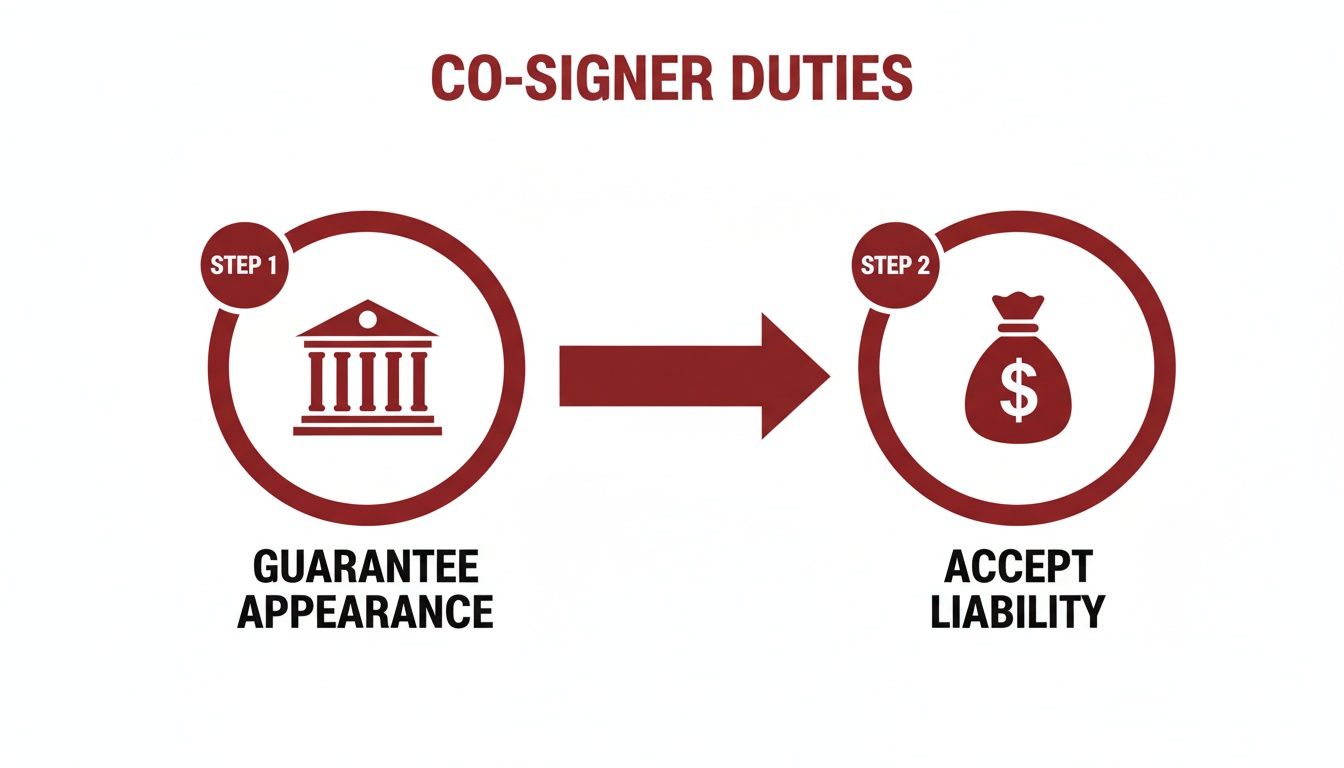
As shown, you promise to ensure the person appears in court and accept the financial consequences if they do not.
This is similar to cosigning a loan. As Bankrate.com explains about cosigner rights, you take on the full legal responsibility to repay the debt if the primary borrower defaults. The lender can pursue you for payment. It is a serious commitment that can affect your financial health.
What Happens if the Defendant Misses Court
If the defendant misses a court date in Georgia, the judge issues a warrant for their arrest. This starts a legal process called bond forfeiture, and your financial commitment becomes active. The court requires the bail bond company to pay the full bail amount.
Once a bond is forfeited, the agreement you signed gives the bail bond company the legal authority to recover the full bail amount from you. This is a contractual obligation.
The bail bond company will then begin collection efforts to recover the debt from you. This is a formal process with significant financial consequences.
The Consequences of a Forfeited Bond
A bail bond company has several legal tools to recover the forfeited amount from a cosigner. These actions can have a long-term impact on your finances.
Potential actions include:
- Civil Lawsuit: The company can sue you for the full bail amount plus any legal fees incurred during the collection process.
- Wage Garnishment: A court judgment may allow the company to take a portion of your wages directly from your paycheck.
- Property Liens: A lien can be placed on your property, such as a home or vehicle, which prevents you from selling or refinancing it until the debt is paid.
- Seizure of Assets: In some cases, funds in your bank accounts or other personal property can be seized to satisfy the debt.
Before you cosign for bail bonds in Forsyth County or nearby areas like Alpharetta and Johns Creek, it is important to understand these financial realities. One Call Bail Bonds ensures every cosigner understands the agreement before signing.
Your Role in Ensuring Court Appearances
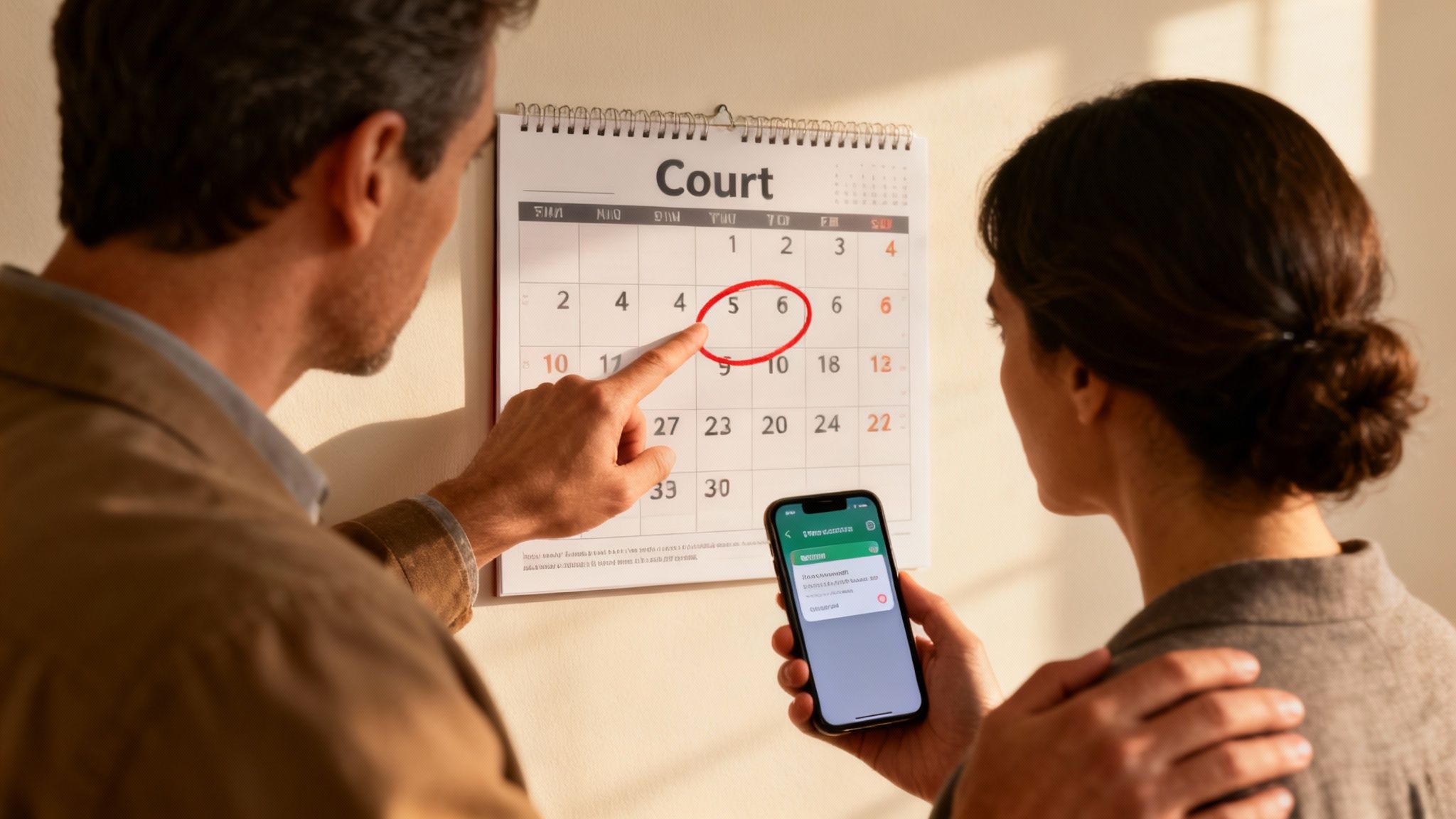
The financial liability only becomes an issue if the defendant misses court. Your primary role as a cosigner is to help ensure the person you bonded out attends every hearing. You are vouching for them with your financial security.
This is an active role and your best protection against bond forfeiture. It requires practical involvement to help keep the process on track. Our agents will assist, but your personal connection is a key factor.
Keep the Lines of Communication Open
Good communication is essential for a successful outcome. You need to be in regular contact with the defendant to stay informed. This is about providing support, not policing their actions.
Be a steady presence and a reliable point of contact, especially as court dates approach. A calm, simple check-in can be very helpful.
Starting this dialogue immediately after their release establishes a cooperative tone. It demonstrates that you are working together toward resolving the case without the complication of a missed court date.
Practical Steps to Prevent a Failure to Appear
Being proactive is the best way to protect yourself and support the defendant. This involves taking simple steps to help them stay organized and meet their obligations.
Here are a few practical actions:
- Shared Calendar: Use a digital calendar or a physical one to track all court dates. Ensure both you and the defendant have access and receive reminders.
- Reminder System: Do not assume they will remember. Send a text or make a phone call a few days before court and again the day before.
- Transportation Plan: Confirm their transportation to the courthouse in Forsyth County or Hall County ahead of time. Help them arrange a ride if needed.
Consider your role as active support. By helping the defendant stay organized and focused on their court dates, you are actively protecting your own financial interests.
Work With Your Bail Bond Agent
You are not alone in this process. Your agent at One Call Bail Bonds shares the goal of ensuring the defendant appears in court. We are your partner throughout this process.
Our agents send court date reminders and are available to answer your questions. We facilitate communication to ensure everyone has the necessary information. This local coordination is important for navigating the court systems in Cumming, Alpharethertta, and across the North Metro Atlanta area.
This partnership provides an additional layer of support. We work with you to encourage the defendant to fulfill their obligations, giving you a professional resource to help manage the situation until the case is concluded. If you have questions about the process, call us 24/7 for direct answers.
How Collateral Secures the Bond with Your Assets

For larger bail amounts, a signature may not be enough. In these cases, collateral is required. Collateral is a physical asset you pledge to secure the bail bond. It ties your personal property directly to the defendant's promise to appear in court.
Collateral serves as the bail agent's security. It ensures that if the defendant fails to appear and the bond is forfeited, the agent can recover the funds by taking ownership of the pledged asset. This step is typically reserved for high-risk situations or large bonds in Forsyth County or Hall County.
A professional bail bond agent will discuss collateral requirements upfront, before you sign any agreement. There should be no surprises.
The Types of Assets Used as Collateral
A bail bond company requires assets with clear titles and verifiable value that can be liquidated if necessary.
Commonly accepted types of collateral include:
- Real Estate: Property is often used for large bonds. You will sign a document allowing the bail company to place a temporary lien on your house or land.
- Vehicles: Cars, trucks, or boats with clear titles can be used. The bail agent typically holds the title until the case is concluded.
- Cash or Cash Equivalents: A cosigner might deposit the full bond amount into an escrow account held by the agent.
- Valuable Personal Property: Items such as fine jewelry or firearms may be considered, but this is less common and depends on the agent's policy.
The process is straightforward. For real estate, a lien is filed with the county clerk. For a vehicle, the title is signed over to the company. This action gives the bail bond company a legal security interest in your asset until the court releases the bond.
The Risk of Forfeiture and Asset Seizure
This is the most serious aspect of cosigning with collateral. If the defendant misses a court date and the bond is forfeited, the bail company has the legal right to seize and sell your collateral to cover the debt.
When you pledge an asset, you give the bail bond company explicit permission to take that asset to cover the full bail amount if the defendant fails to appear. The agreement is binding and not negotiable after the fact.
This means if you used your home to secure a $100,000 bond, the company can initiate foreclosure proceedings to sell your house. If you used your car as collateral, it can be repossessed and sold. You would receive any funds remaining after the bail and associated costs are paid, but you would lose the asset.
When No-Collateral Bonds Are an Option
In many situations, collateral is not required. For smaller bond amounts or for cosigners with strong community ties and financial stability in areas like Cumming or Alpharetta, a "signature bond" may be sufficient. The decision is based on the bail agent's assessment of the risk.
As a cosigner, you accept 100% of the financial liability without having control over the defendant's actions. It is a position of significant risk.
Understanding the legal structure of these agreements is important. To learn more about the type of contract involved, you can read our guide explaining what is a surety bond and how it connects all parties.
A Practical Checklist Before You Agree to Cosign
The request to cosign a bail bond often comes during a stressful time, creating pressure to act quickly. This is a major decision that combines personal loyalty with serious financial risk. It is important to step back and think clearly.
This is not a time for assumptions or emotional decisions. This checklist will help you evaluate the situation methodically, so you understand what you are agreeing to before you sign.
Start With the Foundation: Relationship and Trust
Before considering the financial aspect, be honest about your relationship with the defendant.
- Do I truly trust this person to appear for every court date? Consider their past behavior and reliability. Are they responsible? Do they honor their commitments?
- Can we have a direct, honest conversation about the responsibilities? You must be able to discuss the importance of court appearances without conflict.
- How will we maintain communication? A reliable plan for staying in touch is necessary to remain informed about court dates and case progress.
Any hesitation or doubt is a significant warning sign. Your trust is the primary safeguard against a major financial problem.
Take a Hard Look at Your Finances
Next, evaluate the financial risk with a clear head. Your role as a cosigner is fundamentally a financial one. You must be prepared for the worst-case scenario.
Ask yourself: "If I had to pay the full bail amount tomorrow, could I do so without causing serious harm to my financial stability?" If the answer is no, you should not cosign.
Consider these questions:
- Can I afford to lose the entire bail amount? This is the real risk you are accepting.
- How would a large, unexpected debt affect my family and future? Consider the impact of a property lien, wage garnishment, or a collections account.
- Am I clear on all fees? Understand that the premium is non-refundable and ask about any other potential costs.
Understand the Legal Contract You're Signing
Finally, treat the bail bond agreement as you would any other legally binding contract. Do not let anyone rush you through the process.
Be methodical:
- Read every word before you sign. If you do not understand a term, ask the bail agent to explain it in simple language.
- Organize your documents. You will likely need a government-issued ID and proof of income. Having these ready will streamline the process.
- Ask direct questions. What happens if a court date is missed? What steps will the agency take to locate the defendant? What are my responsibilities in that scenario?
Making an informed decision is always the right approach. If you need help understanding the bail bond process in Cumming, Alpharetta, or anywhere in North Metro Atlanta, call One Call Bail Bonds. We provide direct answers so you can make a confident choice.
Cosigner Self-Assessment Checklist
Before committing, use this table to assess your readiness and understanding of the responsibilities of cosigning a bail bond in Forsyth County or surrounding Georgia areas.
| Question | Yes/No | Consideration |
|---|---|---|
| Do I have 100% trust in the defendant to appear in court? | Your trust is your primary protection against financial loss. Any doubt is a warning. | |
| Can I afford to pay the full bail amount without financial ruin? | This is the worst-case scenario. If you cannot absorb this loss, the risk is too high. | |
| Have I read and understood the entire indemnity agreement? | This is a legal contract. Do not sign anything you do not fully understand. | |
| Do I have a reliable way to contact the defendant at all times? | Communication is essential to prevent missed court dates. | |
| Am I prepared for a long-term financial obligation? | Court cases can last for months or years. This is not a short-term commitment. | |
| Do I understand the difference between the premium and the full bond? | The premium is the non-refundable fee. The full bond amount is your total liability. | |
| Am I willing to actively help ensure the defendant gets to court? | Cosigning often requires active involvement, not passive trust. |
Answering these questions honestly can provide the clarity you need to make a sound decision during a difficult time.
Answering Your Urgent Questions About Cosigning
When someone asks you to cosign a bail bond, questions arise quickly. It is a stressful situation, and you need direct answers to make a good decision. Here are the most common questions we receive from people in Forsyth County, Cumming, and Hall County.
What Happens to the Premium if Charges Are Dropped?
The premium is a non-refundable fee for the service of securing someone's release from jail. It is considered earned once the bond is posted with the court.
This fee covers the bail bond agent's work, time, and the financial risk they assume. Therefore, the premium is not returned, even if the charges are later reduced or dismissed. The service was completed when the person was released.
Can I Back Out of a Bail Bond Agreement After Signing?
Once you sign the indemnity agreement and the defendant is released, you are in a legally binding contract. Your commitment continues for the full duration of the defendant's case.
A cosigner cannot be removed from the agreement until the case is fully resolved by the court and all financial obligations are met. This is one of the most serious responsibilities you accept when you sign.
Does Cosigning for a Bail Bond Affect My Credit Score?
Under normal circumstances, cosigning a bail bond does not appear on your credit report and will not affect your credit score.
However, if the defendant fails to appear in court and the bond is forfeited, your financial obligation is triggered. If you do not pay the full bail amount as required by your contract, the debt may be sent to a collection agency. A collections account will be reported to credit bureaus and can significantly damage your credit.
Do I Need to Live in Forsyth County to Cosign a Bond There?
No, you do not need to be a resident of Forsyth County or Georgia to cosign a bond here. We frequently work with family and friends from across the country.
We can handle most of the paperwork for bail bonds in Forsyth County, Cumming, Alpharetta, and Johns Creek securely online or via email. Part of what is a bail bondsman is to make the process as smooth and fast as possible, regardless of your location.
If you have more questions or need immediate assistance in Forsyth County or the surrounding North Metro Atlanta area, the team at One Call Bail Bonds is available 24/7. We provide clear answers and a direct process to help you make an informed decision. Call us now to get the help you need.