
The call usually comes fast and without much detail. A loved one says they’ve been arrested, they’re in or near Jonesboro, and they need help getting out. You’re trying to stay calm while figuring out where they are, what the charge is, how bail works, and who to trust.
That’s when clear local information matters. If you’re searching for free at last bonding jonesboro ga, you’re probably not doing research for later. You need to know what to do right now, what the process will look like, and how to avoid mistakes that slow down release.
That Urgent Call From Jail What to Do First
Most families start in the same place. They have part of the story, not all of it. Maybe you know the person’s full name but not the booking number. Maybe you know they were taken after a traffic stop or warrant pickup, but you don’t yet know which facility has them.
The first move is simple. Stop guessing and start gathering facts. You want the person’s legal name, date of birth if you have it, the likely arrest location, and any detail about the charge. If they called you directly, ask them where they’re being held and whether bail has already been discussed.
Free At Last Bonding is one of the established names people look for in Jonesboro because families want someone who knows the local jail process and can move quickly once the details are confirmed. In a situation like this, local familiarity matters more than a polished sales script.
What to ask during that first call
If your loved one is able to speak for more than a minute, ask these questions in this order:
- Where are you being held: Jail name matters more than the arrest location.
- What name are you booked under: Nicknames and shortened names can create delays.
- What are the charges: Even a rough description helps.
- Has bail been set yet: If not, you may need to wait for the next step in the court process.
- Do you have any medical or work issue that needs attention: That won’t change the bond process, but it may affect urgency and planning.
The families who move fastest are usually the ones who focus on accurate details first, not rumors from friends or social media.
If this is the first time you’ve dealt with an arrest, it helps to read a plain-language guide on what to do when someone gets arrested. It gives you a solid checklist mindset, which is exactly what you need when stress is high.
What not to do
People lose time by arguing about guilt, calling too many places at once, or assuming cash bail is the only option. None of that gets someone released sooner.
Stay practical. Confirm the jail. Confirm whether bond is available. Then speak with a local bondsman who handles that county every day.
How Bail Bonds Work in Jonesboro and Clayton County
A bail bond is best understood as a financial guarantee to the court. The court sets a bail amount. If the family doesn’t want to post the full amount in cash, a licensed bondsman can post a bond so the person can be released while the case moves forward.
In plain terms, it works a lot like paying for access to the bond service instead of tying up the full bail amount yourself. That’s why bail bonds are so common in urgent release situations.
The cost side in Clayton County
In Clayton County, Georgia, bail bond fees are legally capped at 12% of the total bond amount, which means a $10,000 bond has a maximum fee of $1,200 according to Clayton County bail bond information from Free At Last.
That’s the main reason many families call a bondsman instead of trying to come up with the full bail amount on short notice. The bond fee pays for the service of posting the bond. It is not the same as paying cash bail directly to the court.
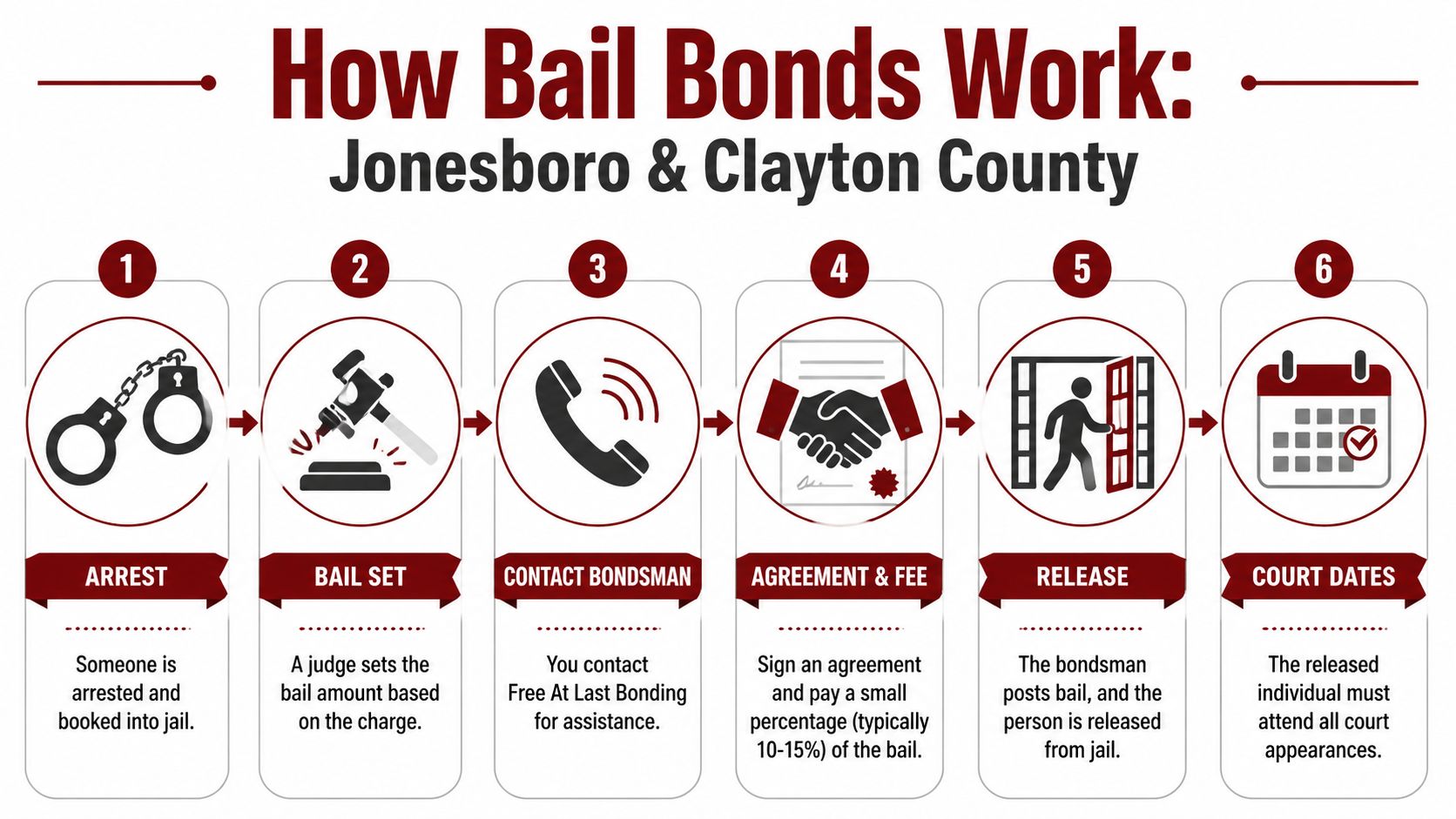
The process in simple steps
Once bail is available, the path usually looks like this:
Arrest and booking
The jail records the arrest, personal information, and charges.Bail is set
The amount may be assigned by schedule or addressed through the court process.You contact a bondsman
You provide the defendant’s details and confirm eligibility.Paperwork is completed
The indemnitor, usually the family member or friend signing, reviews and signs the bond agreement.The fee is paid
The bondsman accepts payment and prepares to post the bond.The jail processes release
Release doesn’t happen the second the bond is approved. Jail staff still have to complete their release steps.
Practical rule: Ask two questions at the start. Is the bond set, and is the person bondable right now? That clears up most confusion fast.
If you want a broader overview of state rules and terminology, this guide on how bail works in Georgia is useful. It helps people separate the court’s role from the bondsman’s role, which keeps expectations realistic.
What the fee does and does not cover
A bond fee gets the bond posted. It does not erase the case, change the charges, or excuse missed court.
The person released on bond still has to appear as required. That’s the trade-off. The family gets someone home sooner, but everyone involved takes on a responsibility to follow the court’s rules carefully.
The Release Process With Free At Last Bonding
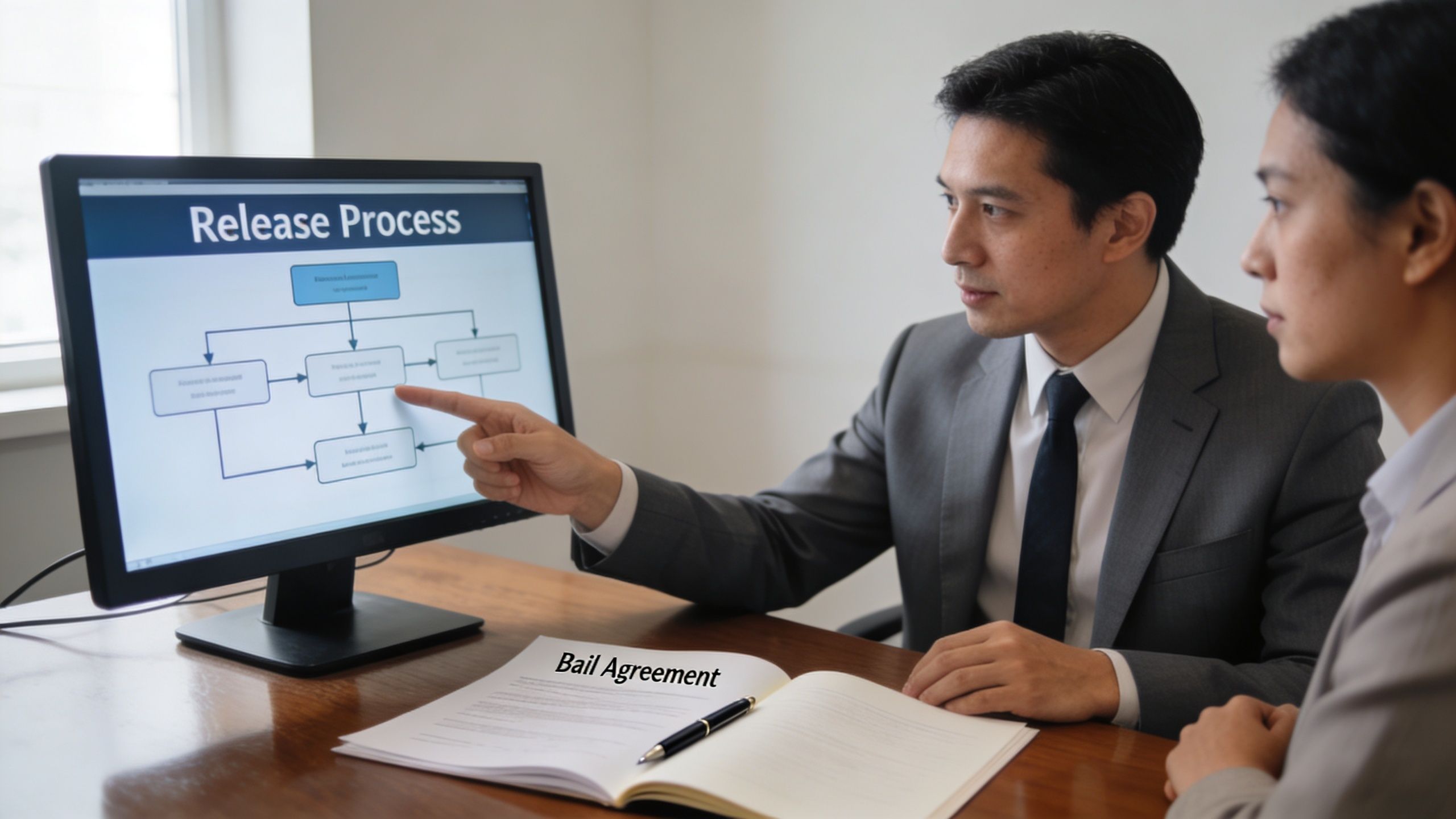
Families do better when they treat release like a sequence, not a mystery. If you call a Jonesboro bondsman with the right details, the process becomes much more manageable.
Free At Last Bonding serves the Clayton County Jail at 9157 Tara Boulevard and the Clayton County Correctional Institution at 11420 S.L.R. Boulevard in Lovejoy, which helps keep communication pointed at the right facility staff for the release process.
What to have ready before you call
You don’t need every single detail to get started, but these are the most useful:
- Full legal name: Use the exact name likely used during booking.
- Date of birth: Helpful when there are common names.
- Jail location: Clayton County Jail and the Correctional Institution are different facilities.
- Charge information: Even a basic description helps narrow things down.
- Booking number if available: This can speed up confirmation.
If you’re missing one or two items, don’t freeze. A good local office can often work with partial information and fill in gaps through the normal process.
What happens after the call
Once the bondsman confirms the case can move forward, you’ll usually go through the agreement, review financial responsibility, and handle payment arrangements. After that, the bond is posted with the jail.
The family’s job is mostly front-end accuracy. The bondsman’s job is to make sure the paperwork and jail-facing steps are handled correctly. That’s where experience shows up in real life. Small errors in names, bond type, or facility can waste a lot of time.
Here’s a practical breakdown:
| Step | What you do | What the bondsman does |
|---|---|---|
| Confirm identity | Provide the correct name and other details | Verify the booking and bond status |
| Review terms | Read what you’re signing | Explain the obligation clearly |
| Handle payment | Pay the required bond fee | Prepare and submit the bond |
| Wait for release | Stay reachable by phone | Coordinate with jail staff as needed |
Release can still take time after a bond is posted. Most delays happen inside the jail’s own release process, not because the family did anything wrong.
What usually slows release
Three things cause the most frustration.
- Wrong facility information: The person was arrested in one place but housed in another.
- Incomplete defendant details: A missing middle name or wrong birth date can cause verification issues.
- Assuming release is immediate: Jails have their own intake and release workflow, and families often underestimate that part.
The practical answer is to stay available, keep your phone close, and avoid repeated calls every few minutes unless the bondsman asks for something. Once the bond is in motion, patience matters.
Why a Local Jonesboro Bondsman Matters
A bondsman who works the county regularly usually makes the process feel less chaotic. That’s not marketing talk. It comes down to knowing the facilities, understanding the local routine, and spotting problems before they create delays.
Free At Last Bail Bonds has been operating since 1994 and brings over 150 years of combined staff experience to the Metro Atlanta area, a background that supports deep familiarity with the Clayton County system.

The local advantage is practical
A local office tends to be better at a few things that families care about immediately:
- Correct jail routing: They know where to start instead of bouncing between counties.
- Cleaner communication: You’re more likely to get direct answers instead of generic call-center language.
- Realistic expectations: They can tell you what’s normal, what’s a problem, and what just takes time.
That matters when you’re trying to bring someone home without making the situation worse.
What doesn’t work as well
National call centers and broad referral services can be useful for basic intake, but they often fall short when the case gets specific. The person answering may not know the local procedure, may not understand the jail’s pace, and may not be the person handling the bond.
If you’re comparing options, this resource on bonding companies in Clayton County GA can help you think about the differences in service style and local coverage.
A bond company earns trust by reducing confusion, not by talking the loudest.
If someone searches free at last bonding jonesboro ga, the reason is usually straightforward. They want a company that’s already familiar with Clayton County and can act like it.
Guidance for Specific Charges DUIs Warrants and More
Not every arrest follows the same rhythm. The bond process may feel similar from the outside, but the details often depend on the charge, the person’s history, and whether the court has already addressed release conditions.
DUI arrests
A DUI case often creates extra anxiety because families assume the person should be released right away once they sober up. Sometimes the process moves smoothly. Sometimes it doesn’t. Booking, hold procedures, and bond approval all affect timing.
The practical move is to confirm where the person is being held and whether bond is already available before promising anyone a pickup time.
Misdemeanor charges
For lower-level charges, families are often surprised by how paperwork-driven the process is. The charge may not be severe, but the release still depends on accurate booking information, bond status, and jail procedure.
What helps most here is speed on the family side. If you answer calls, provide the right spelling, and sign promptly, you remove the avoidable delays.
Felony charges and warrant situations
Felony cases can involve more court oversight before release. Warrant arrests can also create confusion because the person may be picked up on an older matter, and the family may not know whether another county is involved.
In those situations, a few ground rules help:
- Don’t assume one phone call tells the whole story: Warrant matters can involve more than one agency.
- Ask whether there are holds or other cases: That can affect whether the person is releasable after one bond is posted.
- Keep expectations measured: Hard cases aren’t impossible, but they usually require cleaner communication.
If the charge sounds serious, slow down and verify every detail. Families create trouble when they rush ahead on partial information.
Juvenile or unusual situations
Some families call expecting a standard adult bail bond process, only to learn the case involves a different procedure. That can happen with juvenile matters, probation issues, or certain court restrictions.
The safest approach is to describe the situation exactly as you know it and let the bondsman tell you whether it fits a normal bond process or needs an attorney, court action, or added review first.
Help Beyond Clayton County For Forsyth Hall and North Georgia
People don’t always search by the exact county they need. A family may start with Jonesboro because that’s the name they heard, then realize the arrest happened much farther north. That’s common when someone travels for work, gets stopped while passing through, or has a warrant from a different county.
That’s why the right answer isn’t always the same company in every location. Free at last bonding jonesboro ga makes sense for Clayton County questions. It doesn’t mean they’re the best fit for every jail in North Georgia.
When the arrest is in the next county over
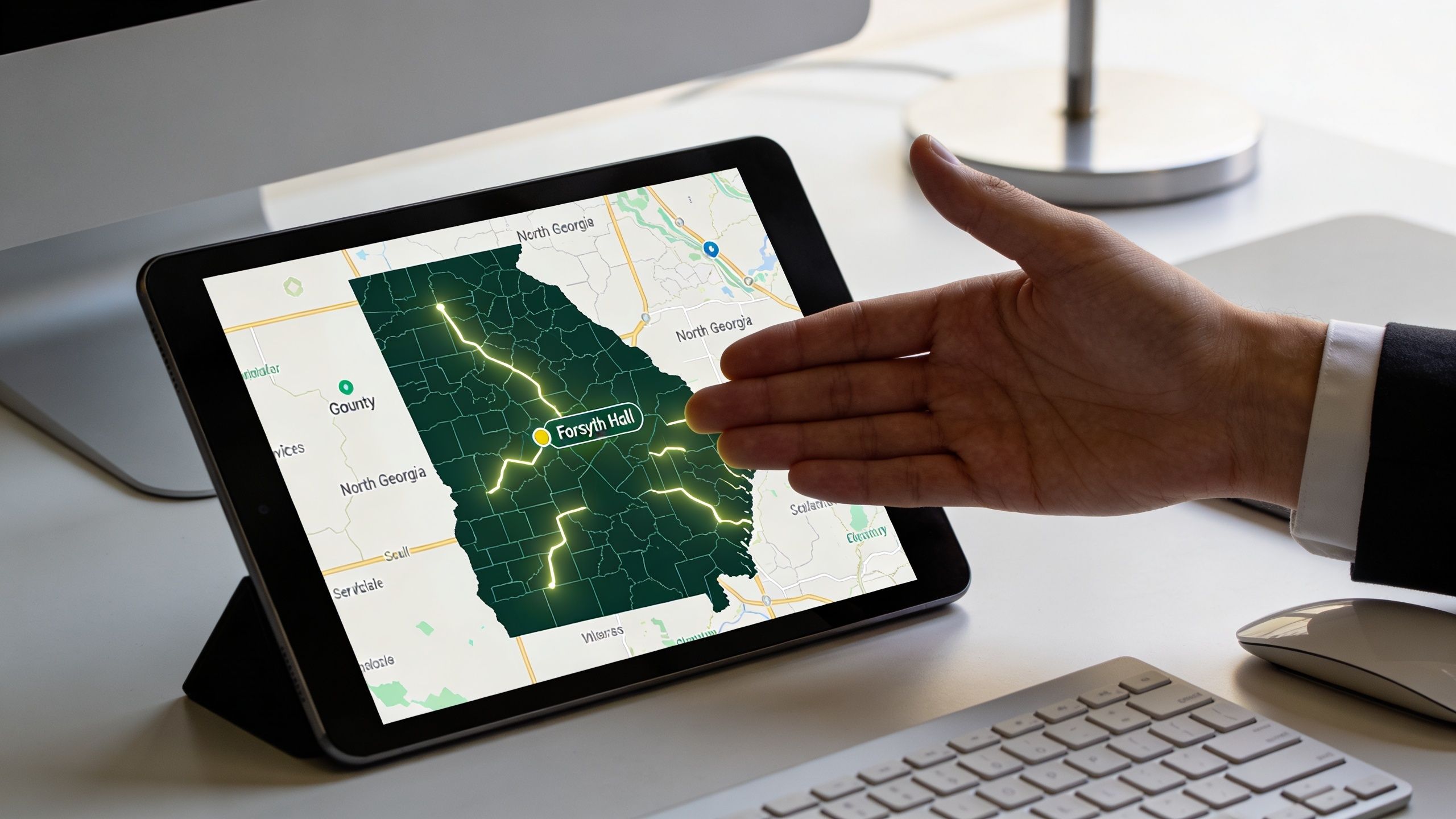
If the person is in Forsyth County, Hall County, Cumming, Dawsonville, Alpharetta, or Suwanee, you usually want a bondsman who works that North Georgia area daily. The same principle applies as it does in Jonesboro. Local knowledge tends to produce fewer mistakes and steadier communication.
A family searching for bail bonds near me, 24 hour bail bonds, or fast jail release is usually asking one real question. Who can get involved quickly and handle the right jail without confusion?
Match the bondsman to the jail
Use this simple comparison:
| If the person is held in | Best approach |
|---|---|
| Clayton County area | Call a bondsman who works Jonesboro and Clayton County regularly |
| Forsyth or Hall County | Call a bondsman based in that North Georgia service area |
| You’re not sure where they are | Start by confirming the facility before discussing payment |
That last point saves a lot of frustration. Families often focus on cost first, but location comes first. If the wrong office starts the process, everyone loses time.
What families get wrong
The biggest mistake is assuming all Georgia bail bond service is interchangeable. It isn’t. Counties have different routines, jails have different release flow, and a bondsman who sounds helpful on the phone may still be the wrong fit if they don’t work that jail consistently.
The better approach is simple:
- Confirm the jail
- Confirm the county
- Call the local bondsman for that area
- Stay reachable until release is complete
That method works whether the arrest happened in Jonesboro or in the North Georgia corridor.
Frequently Asked Questions About Bail Bonds in Georgia
A lot of confusion starts after the bond is posted, not before. Families feel relief once release is approved, then run into questions about collateral, court dates, and what happens next.
Is collateral always required
No. Some bonds can move forward without collateral, while others may require it based on the case, the bond amount, the defendant’s history, or the financial risk involved.
That decision is case-specific. A reputable bondsman should tell you plainly whether the bond can be written on signature and fee alone or whether property, a vehicle title, or another form of security is needed.
Ask about collateral early. It’s better to know the real requirement at the start than to discover it after paperwork begins.
What does the defendant have to do after release
The main responsibility is straightforward. They must appear for every required court date and follow any release conditions. That can include staying in touch with their attorney, avoiding new arrests, and complying with any court-ordered restrictions.
Families sometimes think the bondsman’s role ends the moment the person walks out of jail. It doesn’t. The bond remains tied to the defendant’s compliance until the case reaches the point where the bond obligation ends.
What happens if someone misses court
Missing court can become a serious problem quickly. The court may respond with a warrant, and the bond can be placed at risk.
If a date was missed because of confusion, illness, or some other issue, the right move is immediate action. Contact the attorney and the bond company right away. Waiting usually makes the problem harder to fix.
Can you start the process if you don’t have all the information
Usually, yes. It helps to have the full legal name, date of birth, charge, and jail location, but families often begin with only part of that.
What matters is accuracy with whatever you do have. One correct detail is more useful than three guesses.
Is the bond fee refundable
In normal practice, the bond fee is the payment for the service of writing and posting the bond. It isn’t handled the same way as cash bail paid directly to the court.
If you’re unsure how a specific payment is being treated, ask that question before signing. A good bondsman won’t make you dig for the answer.
If your loved one is in Forsyth or Hall County and you need help right now, contact One Call Bail Bonds. Their team serves North Georgia around the clock from Cumming and can walk you through the release process clearly, quickly, and without adding confusion to an already stressful situation.