
The call usually comes at the worst time. Late at night. Early morning. During work. A family member says they have been arrested, and the next few minutes feel scrambled. You want one thing first. Find out where they are, whether they are safe, and how fast they can get out.
When the arrest involves burke county jail in Morganton, NC, the fastest path is usually the calmest one. Get the right information, avoid guessing, and work the process in order. Families lose time when they call the wrong office, bring the wrong paperwork, or assume release happens the moment bail is mentioned.
This guide is written the way I would explain it to a worried relative on the phone. Start with location and booking. Confirm whether bond has been set. Understand what kind of bond you are dealing with. Then move quickly, but correctly. That is what gets people released.
Arrested in Burke County What Happens Next
The first hours after an arrest feel slow from the outside, even when staff inside the jail are moving quickly. A son, spouse, parent, or friend may call once, then go quiet. That silence usually means they are being processed, not forgotten.

At this stage, families do best when they focus on facts instead of rumors. Was the arrest made in Burke County. Was the person taken directly to the jail. Has booking started. Has a magistrate reviewed the charge yet. Those answers matter more than replaying the arrest over and over.
A typical pattern looks like this:
- Arrest happens: Law enforcement takes the person into custody.
- Transport to the jail: The person is brought in for intake.
- Booking begins: Staff collect identifying information and process the arrest.
- Bond status gets clarified: A magistrate or the court process determines what comes next.
- Release planning starts: If the charge is bondable, the family can begin arranging payment or a bond.
What families should do first
The smartest move is to assign one calm point person. Too many callers create confusion. One person should gather the full legal name, date of birth if available, and basic arrest details.
Then:
- Confirm the jail location: Make sure the person is at burke county jail and not in another county facility.
- Ask about booking status: If staff say the inmate is not searchable yet, that often means intake is still underway.
- Wait for bond information before making decisions: Families often rush into borrowing money before they even know the bond type.
If you need a general walkthrough of the sequence after an arrest, this guide on what happens after you get arrested helps explain the bigger picture in plain language.
Tip: The first useful question is not “How do I get them out right now?” It is “Have they been booked and has bond been set?” That answer determines every next step.
What slows things down
Most delays come from avoidable mistakes. Families call the courthouse before the jail has finished intake. They spell the inmate’s name wrong. They assume every charge has immediate bond. Or they expect release the moment money changes hands.
A steady approach works better. Confirm custody. Verify booking. Get the bond details. Then act.
Burke County Jail Location and Key Contacts
If you are trying to help someone at burke county jail, you need the right building first. Burke County Jail is in Morganton, North Carolina, and it is a 70,969 square foot detention facility built to house up to 256 inmates according to the project profile for Burke County Jail.
That matters for one practical reason. Large detention facilities often have separate functions under one broader justice system umbrella. The jail handles custody, booking, and release. The courthouse handles hearings and court files. Families mix those up all the time.
Use the right office for the right problem
If your goal is release, start with the jail, not the clerk’s office. The clerk may matter later for court dates and records, but the jail controls the immediate custody side.
Here is the quick-reference list most families need.
| Office | Address | Phone Number |
|---|---|---|
| Burke County Jail | 130 Government Drive, Morganton, NC 28655 | Call the Burke County Sheriff’s Office main line and request detention or booking |
| Burke County Sheriff’s Office | 130 Government Drive, Morganton, NC 28655 | Public main line, verify through official county directory |
| Burke County Courthouse | Morganton, NC | Verify through official court directory before travel |
| Clerk of Superior Court | Morganton, NC | Verify through official court directory before travel |
Why this distinction matters
Families often drive straight to the courthouse because they think “court equals bond.” In practice, if someone is freshly arrested, the jail is the center of action. That is where booking happens. That is where bond paperwork gets coordinated after it is authorized. That is where release is completed.
Key takeaway: If you are in a hurry, do not bounce between agencies. Confirm where the inmate is being held, then deal with the office that controls that stage of the process.
Before you leave home
Bring the basics and keep expectations realistic.
- Valid identification: You may need it for paperwork or verification.
- Inmate details: Full name and date of birth help avoid errors.
- A charged phone: You may need to make multiple calls while waiting.
- Patience with the process: Even efficient facilities still have security procedures.
If you are unsure whether to call, wait, or travel, the best answer is usually to call first and verify the inmate is fully booked and bond information is available.
How to Find an Inmate and Understand Booking
The most useful first task is locating the inmate in the system. Until you can confirm that, families tend to chase half-answers.
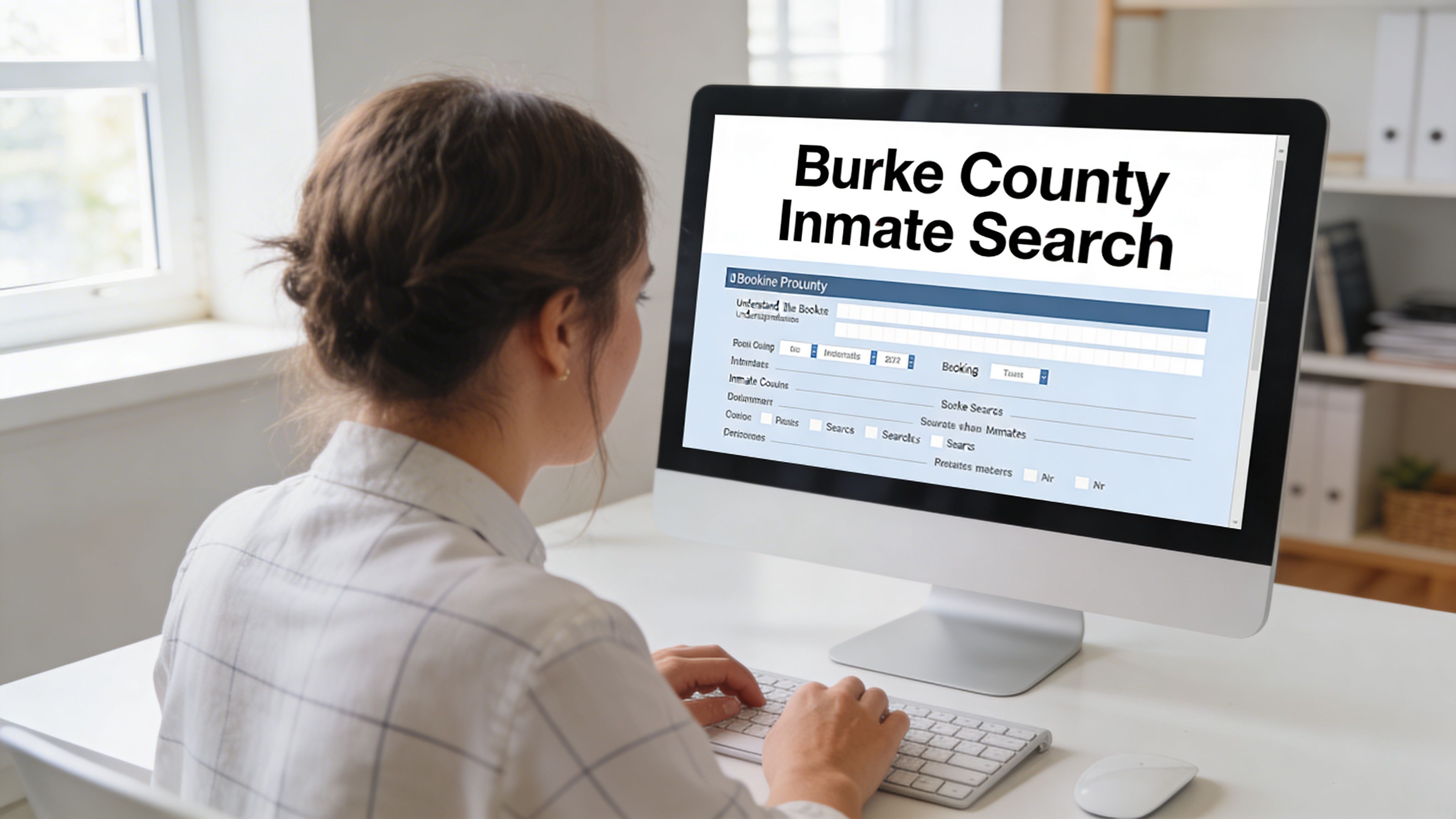
Burke County provides inmate information tools, and the jail’s average daily population is around 106 inmates, operating at about 42% utilization relative to its 256-bed capacity, which can help reduce overcrowding-related delays in steps like bail hearings according to the Burke County Jail Inmate Handbook.
How to search the inmate roster
Use as much accurate identifying information as you have. The best search terms are usually:
- Full legal name
- Date of birth
- Booking date if known
If the person was arrested very recently and does not appear yet, that usually means booking is still underway. Wait a bit, then search again.
For a general step-by-step guide to roster searches, this page on how to find someone in jail is a helpful companion.
What booking usually includes
Booking is more than putting someone in a cell. Staff typically work through identification, intake questions, fingerprints, photographs, property handling, and charge entry. During this stage, the person may not be immediately visible in the public search.
That delay makes families nervous, but it is common. A missing search result right after arrest does not automatically mean the person was moved or released.
What to look for in the search result
Once the inmate appears, focus on the fields that affect release:
- Charges: This tells you what the jail is holding the person on.
- Booking number: Helpful when speaking with jail staff or a bondsman.
- Housing status: Useful for visitation and communication questions.
- Bond amount or bond status: This is the release trigger.
If no bond amount appears, do not assume there is no bond. It may not be entered yet, or the person may be waiting on a magistrate decision.
Tip: Write down the inmate name exactly as it appears in the roster. Small spelling differences create problems when families start bond paperwork.
What works and what does not
What works is simple. Search by legal name. Confirm the charge. Verify whether bond is set. Ask one clear question at a time.
What does not work is relying on social media posts, third-hand texts, or trying to interpret jail codes without verification. I have seen families waste hours because one cousin said, “I heard he’s getting out soon.” Until bond is posted and the jail clears release, nobody is out.
If the inmate is listed and bond has been set, you are ready for the next decision. Pay the full amount directly if that is realistic, or use a bail bondsman if you need a surety bond option.
The Bail Bond Process in Burke County Explained
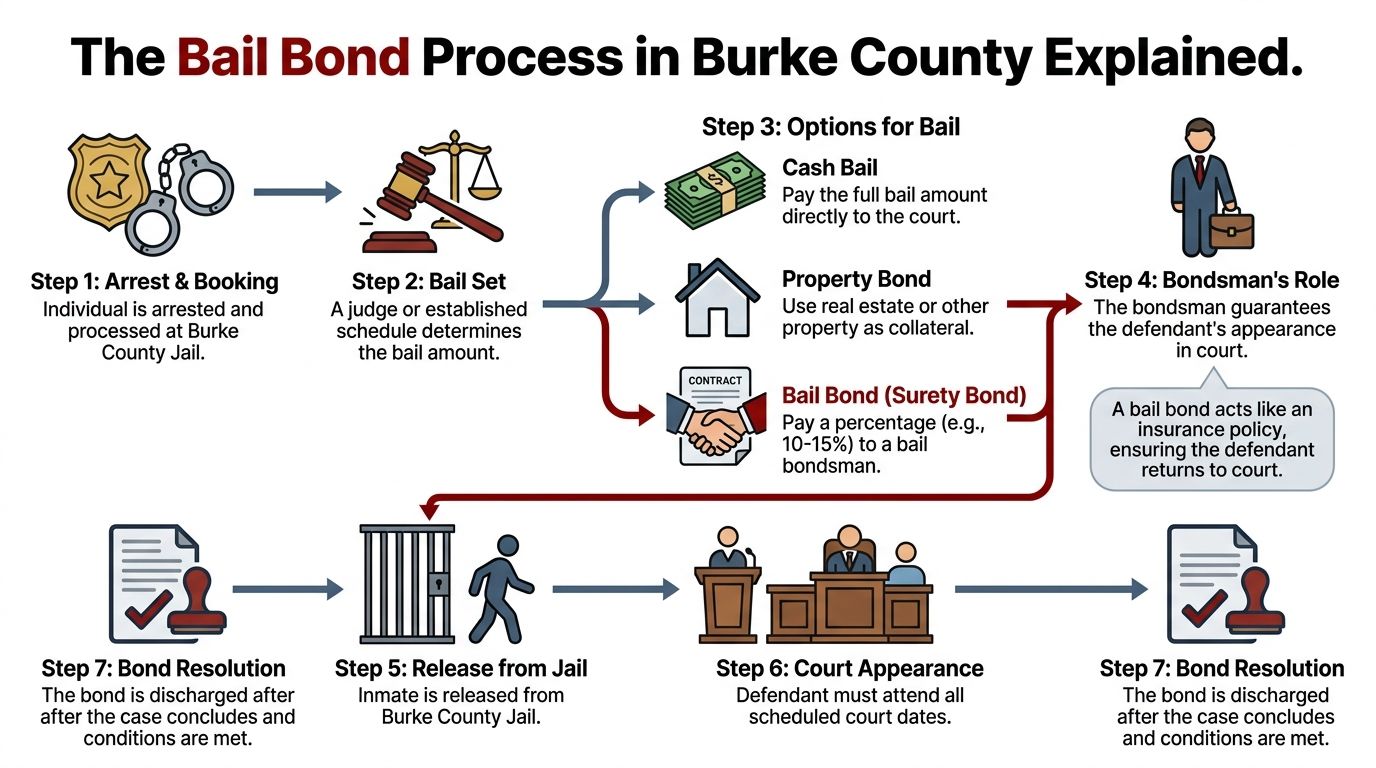
A bail bond works a lot like a guarantee. The court wants assurance that the defendant will return for required hearings. If the family cannot or does not want to post the full bond directly, a bondsman can post a surety bond instead, subject to approval and paperwork.
That is the part many families misunderstand. The goal is not just to make a payment. The goal is to secure release while protecting the court’s requirement that the defendant appear.
The practical sequence
The jail’s booking design supports efficient processing, with magistrate handling typically within 2 to 4 hours after arrest and an experienced bondsman often able to help secure release within 6 to 12 hours on average once the case is bondable, as noted earlier from the facility information tied to Burke County Jail.
That does not mean every case moves on that timeline. Holds, more serious charges, paperwork issues, and missed information can all slow things down. But it gives families a useful frame for what “fast” usually means in practice.
Here is the sequence that matters most:
Bond is set or confirmed
Until this happens, nobody can intelligently quote the next step.The family chooses how to post bail
Common options include paying the full amount directly or using a surety bond through a bail bondsman.The indemnitor or co-signer completes paperwork
This person matters. The co-signer is promising more than support. They are taking responsibility tied to the bond agreement.The bond is posted
Once accepted, the jail begins release processing.The inmate is released
Release is not instant. The jail still has to complete internal discharge procedures.
What the co-signer needs to understand
Plain talk is essential here. A co-signer is not just a reference. A co-signer is the person standing behind the bond agreement.
That usually means the co-signer should be ready to provide:
- Government-issued identification
- Basic employment and residence information
- Inmate details
- A clear way to stay in contact
- Any collateral information if the bond company requires it
Some families search for no collateral bail bonds because they want the fastest path with the least financial strain. Sometimes that is possible. Sometimes it is not. The decision depends on the bond amount, charge profile, court history, and overall risk. What works on a small local charge may not work on a higher-risk file.
Cash bond versus surety bond
A quick comparison helps.
| Option | How it works | Main trade-off |
|---|---|---|
| Cash bond | You pay the full bail amount directly | Ties up more money at once |
| Surety bond | A bondsman posts the bond after paperwork and fee arrangements | Requires approval and compliance with bond terms |
Families often ask which option is “better.” The honest answer is that the better option is the one you can complete correctly, without causing a new problem. A rushed cash scramble can be worse than an organized surety bond.
If you want a plain-English overview of the general system, this guide on how bail works in Georgia explains the core concepts well, even though local procedure depends on the jurisdiction.
Tip: Fast release comes from complete information, not panic. The family that has ID, accurate inmate details, and one decision-maker usually moves faster than the family with five callers and no paperwork.
What slows release after bond is posted
Even after posting, there can still be waiting. Staff must verify the bond, process the release file, return allowable property, and clear internal checks.
What works is staying reachable and responsive. What does not work is calling every few minutes for updates. One check-in at sensible intervals is enough unless the jail asks for something specific.
Visitation Commissary and Inmate Communication
If your loved one is not being released immediately, the next question is usually how to support them without causing trouble for them inside. Families sometimes accidentally make things harder at this point.
The basic rule is simple. Follow the jail’s process exactly. Do not improvise with property, clothing, or unapproved items.
Inmates are allowed only certain jail-issued property and limited approved items. Rules against altering jail property or blocking officers’ view into cells are enforced, and violations can lead to discipline or added charges, as noted earlier from the inmate handbook.
Visitation rules families should respect
Call ahead or verify online before showing up. Jails often use scheduled visitation blocks, and some communication may happen through video systems rather than traditional in-person contact.
A few practical rules usually make the difference:
- Dress conservatively: If staff think clothing violates policy, the visit may be denied.
- Arrive early: Late arrival can cost the whole visit.
- Bring valid ID: No ID often means no visit.
- Do not coach the inmate on calls or visits: Staff monitor communication, and careless conversation can create legal trouble.
Commissary and money deposits
Commissary funds help inmates buy approved extras such as snacks, hygiene items, and other allowed supplies. The important part is using the jail’s approved deposit method. Families lose time when they send money through the wrong channel or show up expecting staff to accept cash at the desk.
Before depositing funds, verify:
| Need | What to confirm |
|---|---|
| Inmate identity | Full name and booking information |
| Deposit method | Online, kiosk, phone, or approved vendor |
| Posting time | When funds become available |
| Restrictions | Whether holds or rules affect spending |
Calls, mail, and messages
Phone calls from jail are often the fastest way to stay in touch, but inmates usually have limited control over timing. Missed calls happen. That does not always mean something is wrong.
Mail and electronic messaging, when available, work best when families keep things simple.
- Use the inmate’s full booking information
- Do not include prohibited items
- Avoid sending anything that could be treated as contraband
- Keep written communication respectful and calm
Key takeaway: The best support is clean support. Approved money deposits, compliant mail, and rule-following visits help. Surprise drop-offs and unofficial arrangements usually do not.
One more practical point. If release may happen soon, remind your loved one not to pick up disciplinary problems inside. Small rule violations can create bigger headaches at exactly the wrong time.
Beyond Release Addressing Common Family Concerns
Families often think the job is done once the jail door opens. In real life, release is the handoff point. The next day matters just as much as the bond.
That is especially true when mental health, medication, or substance use is part of the picture. National data shows that only 21% of jails in the U.S. offer any form of prerelease planning for inmates with mental illness, according to the National Institute of Justice-supported report on jail mental health services. That leaves families carrying a lot of responsibility after bail is posted.
What to ask before release
If your loved one may need support right away, do not wait until they are standing in the parking lot.
Ask practical questions now:
- Do they need medication continuity
- Is there a mental health provider they were already seeing
- Will they need help getting to treatment or a safe place to stay
- Does someone need to help them with insurance or Medicaid-related paperwork
Another overlooked issue is health coverage after custody. Some reporting on North Carolina reentry systems discusses pre-release Medicaid enrollment efforts for prisons and the broader coverage gap people face when leaving custody, including the note that 80% of reentering individuals from prisons are Medicaid-eligible in that context, as covered by North Carolina Health News on Medicaid enrollment before release. That does not answer every Burke County jail question directly, but it points families toward the right concern. Do not assume coverage, prescriptions, or treatment follow-up will sort themselves out.
What helps after the bond is posted
The best post-release plans are concrete.
A strong family response usually includes:
- a ride from the jail,
- a quiet place to sleep,
- medication review,
- a written list of court dates,
- and one reliable person handling reminders.
What does not help is turning release night into an argument, a party, or a flood of opinions. If the person is overwhelmed, tired, withdrawing, or ashamed, keep the first day simple and safe.
A bond solves the custody issue. It does not solve the life issue. Families who understand that tend to keep their loved one on track more effectively.
Frequently Asked Questions About Burke County Jail
How long does release take after bond is posted
It varies. Posting the bond is a major step, but the jail still has internal release procedures to complete. If the file is clean and the jail is moving normally, release can be fairly quick. If there are holds, verification issues, or shift changes, it can take longer.
What is the difference between a cash bond and a surety bond
A cash bond means the full bail amount is paid directly. A surety bond means a bondsman posts the bond after the required paperwork and approval process. Families usually choose based on available funds, urgency, and whether they qualify for a bond arrangement.
What information should I have ready before calling about a bond
Have the inmate’s full legal name, date of birth if available, jail location, charges if known, and bond amount if it has been set. Also be ready with your own identification and contact information if you may be the co-signer.
Can someone be released immediately after arrest
Sometimes, but not usually immediately. The person has to be booked, entered into the system, and cleared for whatever bond process applies to the case. The fastest releases happen when families wait for verified information instead of making assumptions.
What happens if the defendant misses court
Missing court can create serious bond problems. The court may issue additional orders, and the bond can be put at risk. If there is any confusion about a court date, address it early rather than hoping it gets fixed later.
Can I get bail money back
That depends on how bail was posted. With a direct cash bond, the handling of funds depends on court outcome and local rules. With a surety bond, the fee paid to the bondsman is generally the cost of the service, not a refundable court deposit.
Can I take clothes or personal items to the inmate
Do not assume you can. Jails have strict property rules. Unapproved items may be refused, stored, or treated as a problem. Always verify the jail’s current rules before bringing anything.
What is the smartest first step if I feel overwhelmed
Slow down and do three things in order. Confirm the person is at burke county jail. Confirm whether booking is complete. Confirm whether bond has been set. Those three answers clear up most of the confusion.
If you need immediate help with bail in North Georgia, One Call Bail Bonds is available 24/7 to help families move quickly and clearly through the release process. Whether you are dealing with an urgent late-night arrest, need guidance on how to post bail, or want to speak with a bail bondsman who will explain the process without added stress, their team serves Forsyth County, Hall County, Cumming, Dawsonville, Alpharetta, Suwanee, and surrounding areas with fast, respectful support.