
When someone is arrested, understanding the bond bail difference is the first step to getting them home. The terms are often used together, but they mean very different things. This guide provides clear, direct information for families in Forsyth County, Cumming, and surrounding areas.
Bail is the full cash amount set by the court. To secure a release, this entire sum must be paid directly to the court or jail. A bail bond is a more accessible option. You pay a bail bond agent a smaller, non-refundable fee, and the agent guarantees the full bail amount to the court on your behalf. For most families in Forsyth County, GA, a bail bond is the fastest and most practical way to get someone out.
One Call Bail Bonds provides 24/7 bail bonds in Forsyth County with a simple process and clear guidance. Call now to start the process and get straightforward answers.
Understanding Your Two Main Release Options
In Georgia, including Forsyth and Hall County, these two terms define the financial paths for getting someone out of jail. While people use "bail" and "bond" interchangeably, they represent different financial commitments. Choosing the right one depends on your immediate financial situation.
The main distinction is that paying cash bail requires having a significant amount of cash available, often thousands of dollars. For most families in Cumming, Alpharetta, or Johns Creek, this is not a realistic option. A bail bond makes a fast release possible without draining your savings. If you're wondering how a bondsman can make that guarantee, you can learn more in our guide on what a surety bond is.
The image and table below break down the key differences so you can make an informed decision.

Bail vs Bail Bond At a Glance
Here’s a quick table to summarize the differences between paying cash bail and using a bail bond service.
| Aspect | Bail (Paying Full Amount) | Bail Bond (Using a Service) |
|---|---|---|
| Who You Pay | The court or jail directly. | A licensed bail bond agent. |
| Upfront Cost | 100% of the set bail amount. | A smaller percentage of the total bail. |
| Refundability | Yes, the full amount is returned after the case ends (minus court fees). | No, the fee is non-refundable and pays for the service. |
| Financial Risk | You risk losing the entire bail amount if the defendant misses court. | The bail bond company assumes the full financial risk with the court. |
A bail bond transfers the financial burden from you to a professional bail bond company. You pay a predictable fee for a service, and the agent handles the process to secure a release as quickly as possible.
How Georgia Courts Determine and Handle Bail
In Georgia, the purpose of bail is simple: it is a financial promise that the person charged will appear for all court dates. It is not a punishment. Understanding this helps clarify the difference between paying bail yourself and using a bond to get someone released in Forsyth or Hall County.
After an arrest, a judge or magistrate sets the bail amount. This decision is based on specific criteria designed to balance a person's right to pretrial release against public safety and the need for them to return to court.
Factors in Setting the Bail Amount
When a judge in Cumming, Gainesville, or Alpharetta sets bail, they consider several key factors.
- Severity of the Charge: Serious charges, like felonies, typically have a much higher bail than misdemeanors.
- Criminal History: Past convictions are a factor, but a history of missing court dates is a significant concern that often leads to higher bail.
- Community Ties: Strong local connections—such as family in the area, a steady job, or long-term residence in North Metro Atlanta—suggest a person is less likely to flee. This can result in lower bail.
- Public Safety Risk: The court must consider whether releasing the person would pose a danger to the community or any specific individuals.
For more information on this part of the process, you can read our guide on what happens at a bond hearing.
Paying the Full Cash Bail Directly
If you have the funds, you can pay the entire bail amount directly to the court or jail. This is called posting a cash bail. It means if the bail is $10,000, you must provide $10,000 in cash.
Key Takeaway: Paying cash bail ties up a large amount of money for the duration of the case, which can last for months or even years.
This is a significant obstacle for most families. That money is inaccessible until the case concludes. While you get the funds back (minus court fees) if the defendant attends all court appearances, providing that much cash upfront is often not feasible. This is why bail bond services exist—they offer an affordable and practical way to get someone out of jail fast.
The Bail Bond Process: A Step-by-Step Guide
A bail bond is a service that secures a fast and affordable release from jail. When paying full cash bail in Forsyth County, Johns Creek, or Alpharetta is not possible, a bail bond is the most direct path forward. It is a simple agreement with a licensed bail agent that starts the release process immediately.
You pay a non-refundable fee, which is a fraction of the total bail amount. In exchange, the agent posts a surety bond with the court, guaranteeing the full amount and securing the defendant's release. The process involves a few key people working together.
The Key People Involved
Knowing the roles of each person makes the situation less confusing. There are typically three parties in a bail bond agreement.
- The Defendant: The person who has been arrested and charged. Their primary responsibility after release is to attend every court date.
- The Co-signer (or Indemnitor): Typically a family member or close friend who contacts the bail bond agent. The co-signer pays the fee and legally guarantees to the bail company that the defendant will go to court.
- The Bail Agent: A licensed professional who manages the process. The agent explains the paperwork, posts the bond at the jail, and serves as your point of contact.
This system is designed for speed. The bail bond approach is fundamental to how pretrial release works in the United States, which is one of only two countries where for-profit bail is central to the justice system. You can get a deeper look into this system from research compiled by The Bail Project.
The core function of a bail bond is to transfer the financial risk from your family to the bonding company. You pay a predictable service fee, and the agent takes on the responsibility for the full bail amount with the court.
The entire process begins with one phone call. A professional agent can explain the costs, clarify the co-signer's role, and start the paperwork immediately—often without you needing to leave your home. That efficiency is critical when time is short.
A Clear Financial Comparison of Bail vs Bond
When getting someone out of jail, the primary concern is often financial. Understanding your options is critical, because the main difference between bail and a bond comes down to how much you pay now and what you get back later.
If you pay a cash bail, you are responsible for the entire amount set by the judge. A $10,000 bail requires $10,000 in cash. While that money is returned when the case is over (minus court fees), it remains tied up for months. That is money you cannot use for other expenses, like legal fees.
A bail bond service works differently. You pay a bondsman a smaller, non-refundable percentage of the total bail. This fee pays for their service of guaranteeing the full bail amount to the court, shifting the financial risk from you to them. It is a practical way to secure a release without liquidating assets.
Financial Breakdown: Cash Bail vs Bail Bond Fee
This table shows the immediate out-of-pocket costs for common bail amounts in Forsyth and Hall County. It illustrates what you would pay upfront and what you can expect to be returned.
| Bail Amount | Upfront Cost (Cash Bail) | Typical Upfront Cost (Bail Bond) | Amount Refunded at Case End (Cash Bail) | Amount Refunded at Case End (Bail Bond) |
|---|---|---|---|---|
| $5,000 | $5,000 | A smaller percentage (e.g., $500 – $750) | $5,000 (minus fees) | $0 (fee is for service rendered) |
| $10,000 | $10,000 | A smaller percentage (e.g., $1,000 – $1,500) | $10,000 (minus fees) | $0 (fee is for service rendered) |
| $25,000 | $25,000 | A smaller percentage (e.g., $2,500 – $3,750) | $25,000 (minus fees) | $0 (fee is for service rendered) |
As shown, the bond fee is significantly more affordable upfront, which makes it the most viable option for many families.
This is not a new trend. As bail amounts have increased, more people have relied on bail bonds. In 1990, only 24% of felony defendants used a commercial bond for release. By 2009, that number had doubled to 49%. This shift, detailed in research by the Prison Policy Initiative, shows how essential bail bond services have become.
The process of getting a bond is simpler than most people realize.

It comes down to two steps: paying the fee and signing the agreement. The bondsman then handles the rest to get your loved one released.
In some cases, collateral may be needed to secure a bond, particularly for very high amounts. This is not always required, and we can discuss your options clearly and privately. If you need help in Cumming, Alpharetta, or Johns Creek, call us for a no-obligation discussion.
Understanding the Co-Signer's Role and Responsibilities
When a friend or family member is in jail, becoming a co-signer—also known as an indemnitor—is a significant act of support. It is also a serious commitment. By co-signing, you are making a financial promise to the bail bond company.
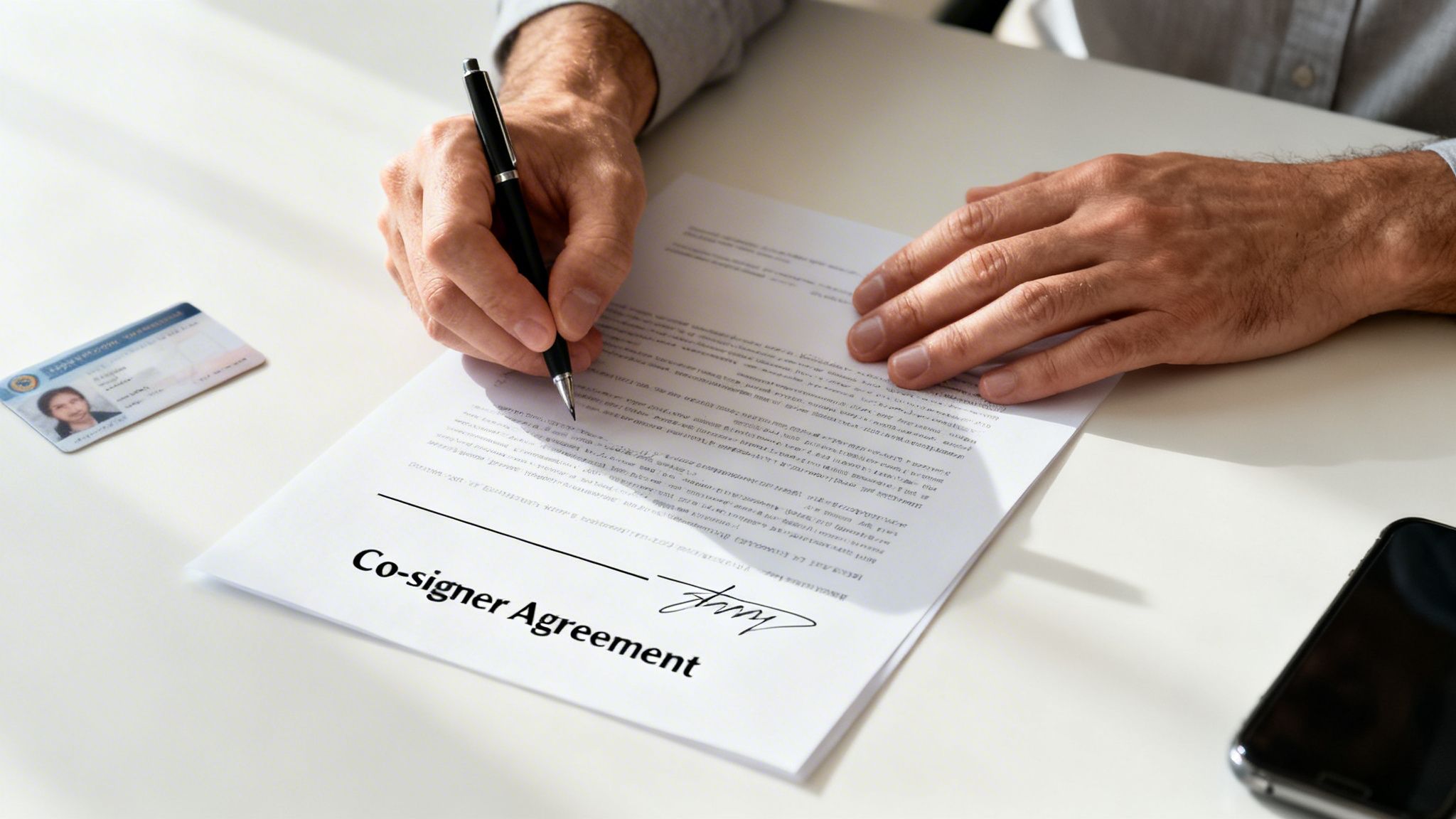
Your signature is a legal guarantee that the defendant will attend all court dates. If they do not, you become financially responsible for paying the full bail amount. This guarantee provides the bail agent with the security needed to post the bond and secure the release.
The bail system can place a significant financial strain on families. This burden is sometimes compounded by existing inequalities. Research from The Hamilton Project has shown that Black defendants can face bail amounts $10,000 higher than white defendants for similar crimes. When the median bail amount is eight months' income for the average person in jail, the co-signer's role becomes even more critical.
The Co-Signer's Commitment
Agreeing to co-sign involves specific responsibilities. A professional bail agent will explain exactly what you are agreeing to before any documents are signed.
Your responsibilities include:
- Ensuring Court Attendance: Your primary role is to make sure the defendant gets to every court hearing on time.
- Maintaining Communication: It is important to stay in contact with both the defendant and the bail bond agency.
- Financial Guarantee: You accept full financial liability for the bond if the defendant fails to appear in court.
Key Insight: A co-signer provides the security the bail bond company needs to take on the financial risk. This partnership is what makes a fast release possible for families in Forsyth County and Hall County.
Working with an experienced local agent ensures you understand the agreement. For more details, see our guide on what are the responsibilities of a co-signer. This knowledge helps you make a confident decision.
Practical Next Steps to Secure a Release Now
When you learn that a friend or family member is in jail in Forsyth County, Cumming, or Gainesville, the most important thing is a clear plan of action.
You do not have to navigate this alone. The entire release process can begin with a single phone call.
What to Do Immediately
Follow these steps to get the process started. A professional bail bond agent can guide you through everything over the phone.
- Make the Call: Contact a trusted, local bail bond agent first. Help is available 24/7, day or night. This is the fastest way to get clear instructions.
- Gather Key Information: You will need the defendant’s full legal name and date of birth. Knowing which jail they are in, such as the Forsyth County or Hall County detention center, is also helpful.
- Discuss the Situation: Tell the agent what you know. If you have the charges or the bail amount, provide them. If not, the agent can find this information for you.
- Handle the Paperwork: Most necessary documents can be completed over the phone or electronically. Your agent will explain the co-signer responsibilities and the bond fee so you understand the agreement before signing.
Key Takeaway: You don’t need to have all the answers before you call. A professional bail bond agent in Forsyth County has the local knowledge to find the necessary information and start the process with just the defendant’s basic details.
This process is designed for speed and discretion. With a knowledgeable local partner, each step is simplified to help you secure a release without unnecessary delays.
Frequently Asked Questions About Bail and Bonds
When you need to get someone out of jail, you need direct answers quickly. Here are the most common questions we receive from families in Forsyth and Hall County.
How Quickly Can Someone Be Released?
The release process begins as soon as the bond paperwork is filed with the jail. Our agents work quickly to post the bond immediately.
The final timeline depends on the processing speed of the detention center at that time. When you call us about a situation in Forsyth County or Hall County, we can provide a realistic time estimate based on our experience with the facility.
What Information Do I Need to Start?
You only need three pieces of information to begin:
- The defendant’s full legal name
- Their date of birth
- The jail where they are being held (e.g., the Forsyth County Jail)
If you know the charges or bail amount, that is helpful but not required. Our agents can find that information for you. The entire process can be started over the phone.
Is Your Bail Bond Service Available 24/7?
Yes. We are available 24 hours a day, 7 days a week, including nights, weekends, and holidays. Arrests do not happen on a 9-to-5 schedule, and neither does our service. Our agents serving Cumming, Gainesville, Alpharetta, and Johns Creek are always ready to help.
What Happens If a Defendant Misses a Court Date?
If a defendant misses a court appearance, it is critical that you or the defendant contact us immediately. As the co-signer, you are financially responsible for the full bail amount if they fail to appear.
Immediate Action Is Key: The moment you call us, our first goal is to help you resolve the problem. Often, we can work to get the court date rescheduled, which can prevent the bond from being forfeited and keep a new arrest warrant from being issued.
This is a serious legal matter. For legal advice regarding the court, you should always consult a qualified attorney. Our role is to manage the bond; we cannot provide legal counsel.
If you need immediate help with a bail bond in Forsyth County, Hall County, or the North Metro Atlanta area, call One Call Bail Bonds. We are here to provide clear guidance and fast, professional service.
Call 770-888-8447 to start the release process now. Or find out more at https://onecallforsyth.com.