
The phone usually comes at the worst time. Late at night. Early morning. Middle of work. Someone you care about says they’ve been arrested in Cumming, or picked up near Alpharetta, Suwanee, or Dawsonville, and suddenly you’re trying to figure out bond and bail while your heart is racing.
Slow down. This part is manageable.
When a family calls about a Forsyth County arrest, the first problem usually isn’t the charge. It’s confusion. People don’t know where their loved one is, whether bail has been set, how much money is needed, or how fast release can happen. You need answers in the next few minutes, not legal theory.
Someone Was Arrested in Forsyth County What Happens Now
A common scenario goes like this. A son gets stopped on the way home. A husband is booked after an argument. A friend gets arrested on a warrant they thought was already handled. The family gets one short call, then silence. That’s when people start searching “bail bonds near me,” “24 hour bail bonds Forsyth County,” and “how to post bail fast.”
That panic is normal. The fix is to get organized.

What usually happens first
After an arrest, the person is typically taken for booking. The jail records identity information, the charge, and the hold status. Then one of two things usually matters most for the family:
- Bail is already set for the charge or warrant.
- Bail still needs to be set before release can happen.
If you’re in crisis right now, your first practical move is to confirm the person’s full legal name, where they’re being held, and whether a bond amount exists yet. Don’t guess. Small mistakes slow release.
Practical rule: The fastest families are not the ones who panic harder. They’re the ones who gather the right information first.
Why the system feels so confusing
The bail industry is large because so many families can’t pay the full amount straight to the court. The U.S. commercial bail bond industry is projected to reach $3.5 billion in 2026, and use of commercial bail bonds for releases doubled from 23% to 49% since the 1990s, according to IBISWorld industry reporting. That scale tells you something important. This process is common, but it’s still hard to manage without local help.
If the arrest happened in Forsyth County, don’t waste time jumping between random websites. Start with a local breakdown of what happens after an arrest in Forsyth County Georgia, then get the jail and bond details confirmed.
What you should do in the next few minutes
Use this checklist immediately:
- Get the correct name. Full legal name matters.
- Confirm the jail. Forsyth and Hall County cases can get mixed up by families under stress.
- Ask about the charge. A DUI bond process feels different from a felony hold or warrant pickup.
- Find out whether bond is set. If it is, you can move faster.
- Be ready to sign paperwork. A delay on the family side can be just as costly as a delay at the jail.
You do not need to understand every court term today. You need a clear path from arrest to release.
Bail vs Bail Bond What Is the Difference
Families mix these up constantly, and that mistake costs time.
Bail is the amount the court requires for release. A bail bond is the way many families cover that amount without paying the full total themselves. If you remember nothing else, remember that.
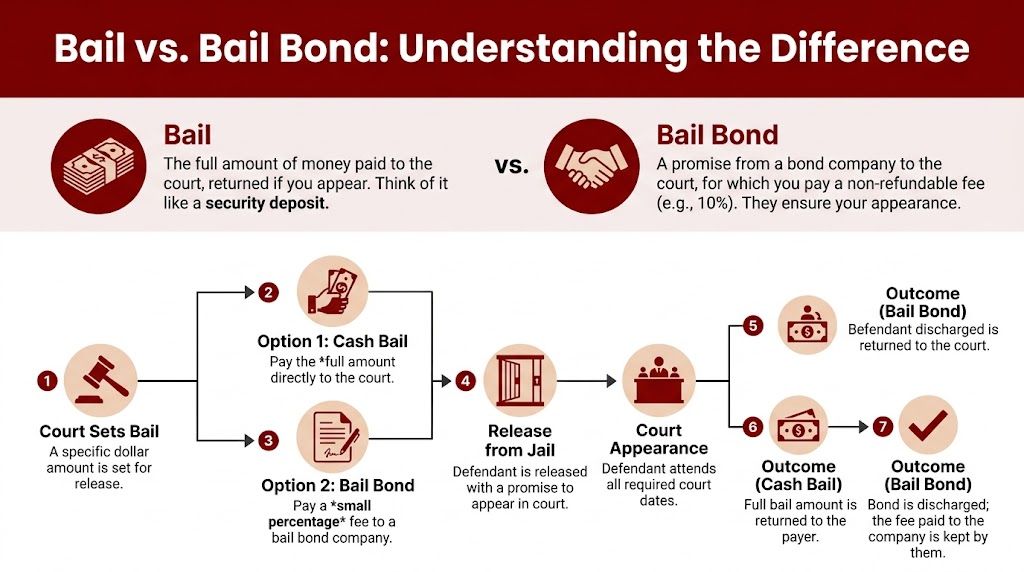
Think of bail like a security deposit
If the court sets bail, that amount works like a security deposit tied to the defendant showing up in court. Pay the full amount directly, and that money is tied up with the court while the case moves forward.
A bail bond works differently. A licensed bondsman guarantees the full amount to the court, and the family pays a smaller non-refundable fee for that service. If you want a plain-English breakdown, this guide on bail vs bond difference lays it out clearly.
The simple difference that matters in real life
Most families don’t struggle with the definition. They struggle with the cash.
If bail is set high, paying the court directly may not be realistic on short notice. That’s why bond and bail are related but not interchangeable. One is the court’s requirement. The other is the tool families use to meet it.
| Feature | Cash Bail | Bail Bond (Surety Bond) |
|---|---|---|
| Who gets paid | Court | Bail bond company |
| Upfront amount | Full bail amount | Small percentage of the bail amount |
| Refundable | Generally tied to court compliance | No, the premium is non-refundable |
| Best fit | Families with immediate access to full cash | Families who need release without paying full bail |
| Speed factor | Can be simple if full funds are ready | Often practical when full cash is not available |
| Risk to payer | Full amount is tied up | Co-signer takes contractual responsibility |
What people get wrong
A lot of families think a bond fee goes toward the defendant’s case or gets credited back later. It doesn’t work that way. The bond fee pays for the guarantee and the risk the bondsman takes.
Bail is what the court wants. A bail bond is how many families make release possible.
Here’s the cleanest way to compare the two:
- Cash bail makes sense if you can afford the full court amount immediately and you’re comfortable tying that money up.
- A surety bond makes sense if speed matters and full cash isn’t practical.
- Recognizance release may happen in some cases, but you should never count on it while someone you love is still in custody.
Why this distinction matters in Forsyth County searches
When someone searches “affordable bail bonds,” “24 hour bail bonds near me,” or “how to post bail,” they usually don’t want a legal seminar. They want to know which path gets a person out faster with the least financial shock.
That’s why I tell families to stop using bond and bail like they mean the same thing. Once you separate them, your options get clearer and your decisions get better.
How Judges Set Bail Amounts in Forsyth and Hall County
Families often look at a bail amount and think the judge just picked a number out of thin air. That isn’t how it works.
Judges and courts look at risk. They want to know whether the person is likely to return to court, whether the charge raises safety concerns, and whether the facts support release at a lower amount, a higher amount, or not at all.
What courts are looking at
A court may use a bail-point scale to quantify risk. Factors like prior convictions, failure to appear, and the nature of the current charge are assigned points. A low score may support release on recognizance, while a high score can push the bail amount higher, as explained by US Legal Forms’ bail-point scale overview.
That means a bond amount usually reflects a mix of facts, not just the charge title.
A judge or magistrate may weigh things like:
- Criminal history
- Prior missed court dates
- Whether the person has strong community ties
- The seriousness of the present allegation
- Any sign the person may flee or ignore conditions
Why two people can get different outcomes
One DUI arrest doesn’t always look the same as another. A person with stable local ties and no missed court dates may be viewed differently than someone with prior failures to appear. A misdemeanor warrant case may move differently than a felony case involving allegations of violence.
That’s why families should stop asking, “What’s the normal bail for this?” and start asking, “What facts is the court looking at in this person’s case?”
A bond hearing is not just about the charge. It’s about the story the court sees when it looks at the defendant.
What helps and what hurts
The court tends to respond well to facts that show stability and accountability. It reacts poorly to anything that suggests the person won’t come back.
A few examples make the pattern clearer:
| Factor | Usually Helps | Usually Hurts |
|---|---|---|
| Court history | Clean appearance record | Prior failure to appear |
| Community ties | Local family, job, residence | Weak local ties |
| Current charge | Lower-level nonviolent allegation | Serious or repeat allegation |
| Identity and records | Clear identification and stable history | Conflicting information |
What families should do with this information
Don’t argue emotionally with the process. Work with the facts in front of you.
If your loved one has a hearing coming, have the practical details ready. Employment, residence, family support, and transportation plans can matter. If the case already has a preset bond, then your focus shifts from arguing the amount to handling release correctly and quickly.
Local experience matters. A bondsman who understands the difference between a preset bond, a hearing delay, and a hold can save you hours of guessing.
Surety Bonds Cash Bonds and Other Release Options
Once bail is set, the primary concern is which release option gets the person out with the least delay and the fewest surprises?
That’s the right question.
Surety bond
A surety bond is the standard bail bond most families use. The bondsman guarantees the full court-set amount, and the client pays a non-refundable 10 to 15 percent premium. If the defendant fails to appear, the bondsman can be liable for the full bond amount, which is why collateral and follow-up requirements may apply, as explained in this overview of the difference between bail and bond and how surety works.
That’s the engine of the bond and bail system. It gives families a practical path to release when full cash bail isn’t available.
If you want the mechanics broken out in plain language, what is a surety bond is the right place to start.
Cash bond
A cash bond means paying the full amount directly to the court. This can work well if the amount is manageable and the payer is comfortable having that money tied up.
For some families, cash is the cleanest option. For many others, it isn’t realistic, especially in an emergency arrest at night or on a weekend.
Other release options
Some cases may involve alternatives, but these are not always available and they are rarely the path you should assume will happen.
- Release on recognizance means the person is released on a promise to appear, with no upfront money.
- Property bond uses real estate or another asset as backing. It can be slower and more complicated.
- Special conditions release may include reporting, restrictions, or no-contact terms.
Which option is usually most practical
For urgent jail release in Forsyth or Hall County, the surety bond is often the most workable route because it balances speed with lower upfront cash than a full cash bond.
Here’s the straight recommendation:
- If full cash is easy and available, compare the cash option carefully.
- If full cash would wipe out savings, look at a surety bond immediately.
- If someone is promising “no problem, no risk, no obligations,” slow down and read everything before signing.
The fastest release option isn’t always the one with the loudest ad. It’s the one you fully understand before you commit.
How Much Does a Bail Bond Cost in Forsyth County
This is the first question families ask, and they should ask it immediately.
The cost of a bail bond is not the full bail amount. It’s the fee paid to the bondsman for posting the bond. In most discussions of bail bond services, that fee is described as a 10 to 15 percent non-refundable premium. What matters for you is getting the exact total in writing before you sign anything.
Ask for the full cost, not the teaser number
Some agencies advertise low-entry payment language that sounds easier than it really is. That’s where families get trapped.
A trustworthy bondsman should explain all of this up front:
- The premium owed
- Whether collateral is required
- What the payment arrangement covers
- What happens if the defendant misses court
- Whether any property or lien is part of the agreement
The clearest warning I can give you is this. Transparent financial discussions matter because some bail arrangements can trap families in debt with hidden fees or lien-based payment plans, as discussed in this analysis of the ethical dimensions of bail bonds and hidden financial obligations.
When collateral comes up
Collateral is not punishment. It’s risk protection.
A bondsman may ask for collateral if the bond is large, the defendant has risk factors, or the financial profile of the deal creates concern. That collateral might involve cash, a vehicle, property paperwork, or another asset, depending on the situation.
But don’t assume collateral is required in every case. Some families qualify without it. Some don’t. The only useful answer is the one tied to the actual charge, bond amount, and defendant profile.
My advice on affordable bail bonds
Don’t chase the phrase “cheap bail bonds” if the paperwork is vague.
Use this checklist before signing:
| What to Ask | Why It Matters |
|---|---|
| What is the total premium? | You need the real cost, not a partial number |
| Is the fee refundable? | Bail bond premiums generally are not |
| Is collateral required? | This affects your financial exposure |
| Are there payment terms? | You need to know the schedule and consequences |
| What triggers extra liability? | Missing court can create major problems |
If someone tells you “zero down” but can’t clearly explain the long-term obligation, walk away until you understand every page. Families in crisis make bad financial decisions when they confuse speed with clarity. You need both.
Fast Jail Release A Step-by-Step Guide for Forsyth County
It’s 11:30 at night. Your phone rings. A family member has been booked into the Forsyth County Detention Center, and everybody wants the same answer. How do we get them out fast?
Here’s the truth. Fast release usually depends less on panic and more on order. In Forsyth County and nearby Hall County, families lose time when they call the wrong place, give the wrong name, or wait too long to handle paperwork. If you want the quickest path, follow the process in sequence.
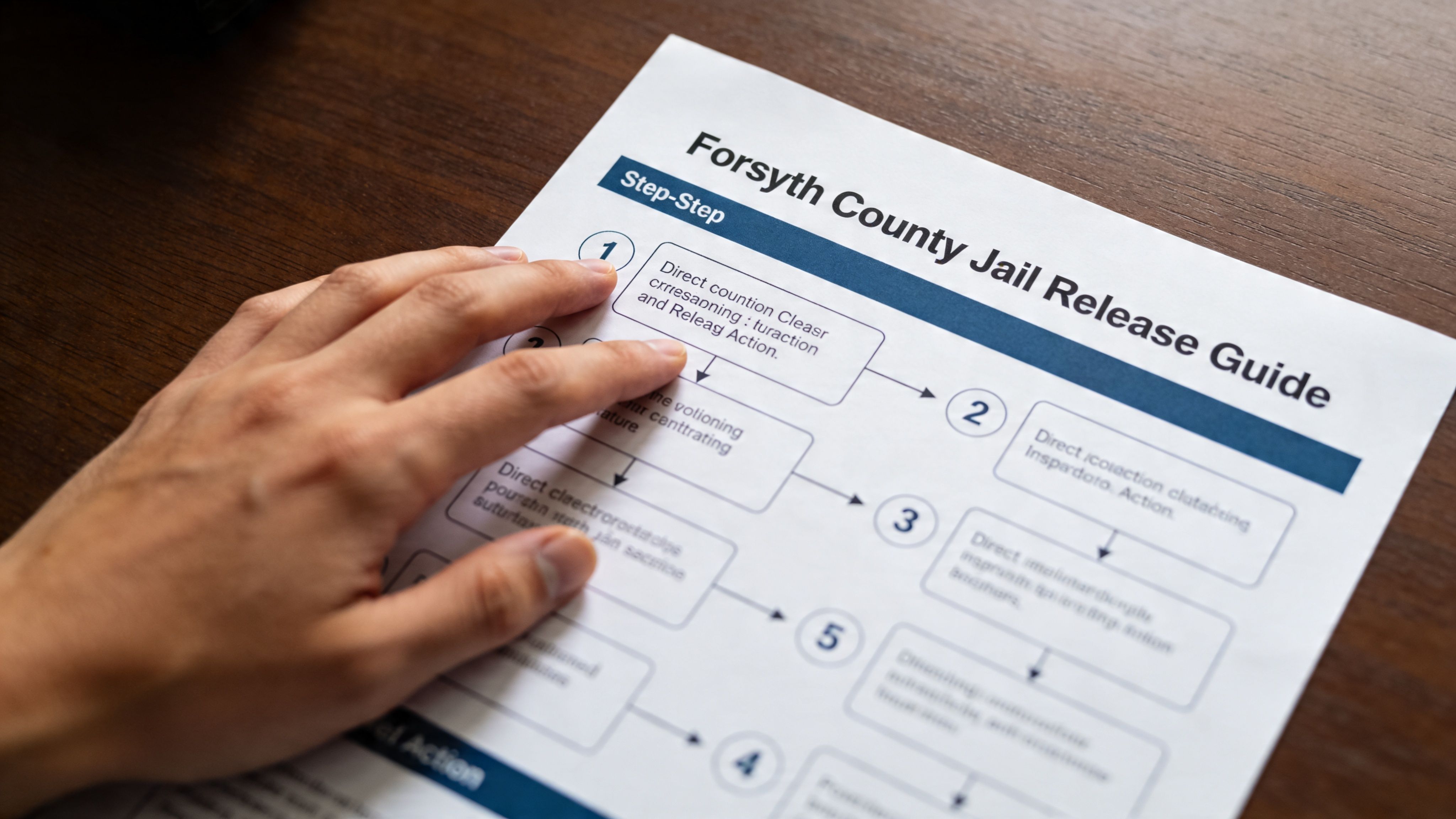
Step one, get the booking details straight
Start with facts. Do not start with rumors from a cousin, screenshots, or half-remembered charges.
Have this ready before you call:
- Defendant’s full legal name
- Date of birth, if you have it
- Where the person is being held
- Charge or warrant information
- Bond amount, if it has already been set
- Your relationship to the defendant
In Cumming, one wrong middle name or one wrong county can slow everything down. If the arrest happened in Forsyth County, say that first. If there is any chance the person is in Hall County instead, say that immediately so nobody wastes an hour checking the wrong jail.
Step two, find out whether bond can be posted yet
This is the step families often misunderstand.
A person can be booked and still not be ready for release. Bond may already be listed. The person may still be waiting for a hearing. A hold from another agency can stop release even when everyone assumes bond is available. You need a real status check tied to the actual jail and actual booking record.
A local bail bondsman who works Forsyth County cases every day can confirm whether the release process can start and what is needed next. That matters because the process at the Forsyth County Detention Center is not identical to every other jail, and Hall County cases can move on a different track.
The fastest file is the file with the right name, the right jail, and the right bond status from the start.
Step three, complete paperwork immediately
Once bond is available, paperwork becomes the bottleneck.
Be ready to provide identification, signer information, and payment details. If collateral is required, gather those documents now, not after lunch tomorrow. If remote signing is available, use it. Waiting to “get to it later” is how a same-night release turns into an extra day inside.
The best co-signer does three things:
- Answers the phone
- Signs quickly after reading the agreement
- Makes sure the defendant will follow court instructions
That third point matters more than families think.
Step four, the bond gets posted
After the documents are signed and payment is handled, the bondsman posts the bond through the process required for that case.
Families often expect the jail door to open right away. That is not how Forsyth County release works. Bond posting starts the release process. It does not finish it. The detention center still has to complete internal release steps, and that can take time even after the bond has been accepted.
Release delays often come from jail processing, not from the bond itself.
Step five, prepare for pickup before the call comes
Do this early. Keep one phone on and answered. Have transportation arranged. Know where the person will go after release, especially if they are getting out late.
If the court attached conditions to the release, learn them before pickup. A no-contact order, travel restriction, or reporting instruction can create a fresh problem within hours if nobody reads the paperwork carefully.
What speeds things up in Forsyth County
This is the practical checklist I give families who need fast jail release in Cumming and the surrounding area:
| Action | Why It Helps |
|---|---|
| Use the exact legal name from booking | Cuts down on record errors |
| Confirm the bond amount before paying anything | Prevents delay from bad information |
| Send documents as soon as they are requested | Keeps the file moving |
| Use one family contact person | Reduces conflicting information |
| Arrange transportation before release is approved | Avoids pickup confusion |
What slows release down
Families create avoidable delays all the time.
Do not argue with jail staff. Do not send multiple relatives to call with different stories. Do not rely on Facebook posts or group texts for jail status. Pick one decision-maker, give accurate information, and move quickly when documents are requested.
If you searched “bail bonds near me” in Cumming, you probably do not need a general explanation of bail. You need the next right step for Forsyth County. That step is simple. Confirm the booking, confirm bond status, finish the paperwork fast, and be ready when the detention center completes release.
What Happens After The Bond Is Posted
A posted bond gets the person out. It does not end the responsibility.
Once released, the defendant has one main job. Show up to every court date and follow every release condition. If they don’t, the problem gets bigger fast for everyone involved, especially the co-signer.
The rules after release are not optional
The defendant may need to obey conditions such as no-contact terms, travel limits, check-ins, or other court instructions. The bond agreement may also require communication with the bondsman if an address, phone number, or job changes.
Carelessness often sets in. They feel relief after release and start treating the case casually. That’s a mistake.
Missing court can turn one arrest into several new problems in a single day.
Why follow-through matters
Research discussed by the U.S. Commission on Civil Rights found that appearance rates were lower when cash bail was assigned at 81 percent compared with 88 percent for unsecured bonds, and assigning cash bail was associated with recidivism increases of 6 percent to 9 percent, according to the U.S. Commission on Civil Rights bail reform report. However you feel about the larger system, one lesson is obvious. Release only works when the defendant takes court compliance seriously.
If the defendant misses court, the court can issue a failure to appear. That can mean a new warrant, bond forfeiture problems, and immediate financial exposure for the signer.
The co-signer needs to understand the risk
If you signed for someone, don’t act like your role ended at pickup.
Keep track of:
- Court dates
- Contact information
- Any release restrictions
- Communication from the bondsman or court
If the defendant starts avoiding calls or talking about skipping court, deal with it immediately. Hoping it fixes itself is how families lose money and trust at the same time.
Frequently Asked Questions About Georgia Bail Bonds
These are the questions people usually ask after the first panic wears off.
Common Questions
| Question | Answer |
|---|---|
| How do I post bail in Forsyth County? | First confirm the jail, charge, and bond amount. Then choose whether to pay full cash bail or use a surety bond through a licensed bondsman. |
| What information do I need to start a bond? | The defendant’s full legal name, jail location, charge information if known, bond amount if set, and your information as the signer. |
| Can I get 24 hour bail bonds near me? | Many bail bondsmen handle calls around the clock. What matters most is whether bond has been set and whether the signer can complete paperwork without delay. |
| Can someone get out on a DUI bond? | Often yes, but the exact process depends on the charge details, hold status, and whether the court or jail has set bond conditions. |
| Are bail bond fees refundable? | A bail bond premium is generally non-refundable because it pays for the guarantee to the court. |
| Can I get a no collateral bail bond? | Sometimes. It depends on the bond amount, the defendant’s risk profile, and the signer’s qualifications. |
| How long does inmate release take after bond is posted? | Release timing depends on jail processing. Bond posting is only one part of the process. The jail still has to complete release procedures. |
| Can a bondsman help with warrant assistance? | A bondsman can often explain how the process works once a person is arrested on a warrant and whether bond is already set, but the warrant itself still goes through the court and law enforcement process. |
If your family is trying to solve bond and bail right now in Cumming, Alpharetta, Suwanee, Dawsonville, Forsyth County, or nearby Hall County, stop guessing and get the case details confirmed first.
If you need immediate help, contact One Call Bail Bonds to speak with a bondsman serving Forsyth County, Hall County, and surrounding North Georgia. They provide 24/7 bail bond assistance, explain the paperwork, and help families start the jail release process with the information they have right now.