
When that late-night call comes in and you hear that someone you care about has been arrested in Orlando, the first problem isn't the court case. It's getting clear, getting organized, and making smart decisions fast.
Most families search for bail bond Orlando help under pressure. They need someone out. They need answers. They don't need vague promises. They need to know what to do right now, what information matters, what the release process looks like, and what the bond will really cost out of pocket.
An Urgent Guide to Getting Someone Out of Jail in Orlando
The first mistake families make is treating every bail company ad the same. A lot of Orlando bail-bond pages talk about speed and all-hours availability, but they often don't explain the full trade-offs. Public Orange County materials list registered agencies, yet the bigger consumer issue is that many families still aren't told clearly that they may face a nonrefundable premium plus possible collateral or added conditions, which can push people to call the first number they find instead of comparing total cost and risk, as reflected in the Orange County bail bond agency listing and consumer transparency gap.
That's why the smart move is to slow the panic down for a minute and focus on sequence. A fast release usually comes from having the right information ready, choosing a bondsman who explains terms clearly, and understanding that the jail controls the final release timing after the bond is posted.
What matters in the first hour
You don't need to solve the criminal case tonight. You need to get the release process moving without creating extra delay.
Start with these priorities:
- Confirm where the person is being held: If you believe they're in Orange County, verify the facility before you start calling around.
- Collect identity details: Full legal name and date of birth matter immediately.
- Find the bond amount if available: The bondsman can move much faster when the amount is known.
- Prepare to sign if needed: The person helping with release may become the indemnitor, which means taking responsibility for the bond conditions.
- Listen for transparency: If an agency avoids direct answers about cost, collateral, or obligations, keep looking.
Practical rule: Fast service matters, but clear terms matter just as much. The fastest bad decision can become the most expensive one.
Families dealing with an arrest often need a simple first-step checklist more than anything else. A practical starting point is this guide on how to get someone out of jail, because the core logic is the same in any urgent release situation. Gather the right details, contact a licensed professional, and don't lose time on guesswork.
What works and what doesn't
What works is direct communication, complete information, and realistic expectations. What doesn't work is calling five places with half the facts, assuming release is instant, or agreeing to paperwork you don't understand.
In Orlando, families usually feel better once the process becomes concrete. Once you know who is in jail, what the bond is, who will sign, and what financial commitment is involved, the situation stops feeling chaotic and starts becoming manageable.
Your First Actions After an Arrest in Orlando
If you get a late-night call saying someone has been arrested in Orlando, the first job is simple. Get accurate information fast so a bondsman can start working without avoidable delay.

Gather the details that move the process
Speed usually comes down to whether the first call includes usable facts. In my experience, families lose time when they only know that a relative was "picked up somewhere in Orlando." A licensed bondsman needs enough information to confirm who is in custody, where they are being held, and whether bond has been set. The Florida Department of Financial Services explains the basic role of licensed bail bond agents and the paperwork involved in the process on its bail bond agent licensing and regulatory page.
Have these ready before you call:
- Full legal name of the person in custody
- Date of birth
- County or facility where they're being held
- ID information if you have it
- Booking number if you can get it
- Bond amount if it has already been set
Even one missing detail can slow things down, especially with common names, suffixes, or confusion between Orange County and a nearby jurisdiction.
What to tell your loved one
If you reach the person in jail, keep the conversation short and practical. Confirm their full name, date of birth, current location, charge if known, and whether they were given a bond amount.
Jail calls are recorded. Save the case discussion for their lawyer.
Keep the first jail call practical. Name, date of birth, location, charge if known, and whether bond has been set.
Mistakes that slow release
Some delays come from booking, bond hearings, or the jail release queue. Others start with the family.
Common slowdowns include:
- Calling before you confirm the correct name spelling: A missing middle name, suffix, or wrong date of birth can send everyone in the wrong direction.
- Assuming the person is at one facility without checking: Orlando-area arrests do not always land where families expect.
- Waiting too long to identify the signer: If the indemnitor is undecided or unavailable, paperwork stalls.
- Treating payment like the finish line: Paying the premium lets the bond be posted. Release still depends on the jail's processing timeline.
Provide clean information early to remove one of the biggest causes of avoidable delay. A focused caller usually gets answers faster, clearer pricing, and a more realistic timeline for release.
How the Orlando Bail Bond Process Works
A family usually reaches this point after the first urgent calls are over and one question remains: what happens between “we're ready” and “they're out”? In Orlando, the bond process itself can move fast. The release does not happen until each step is handled in the right order.
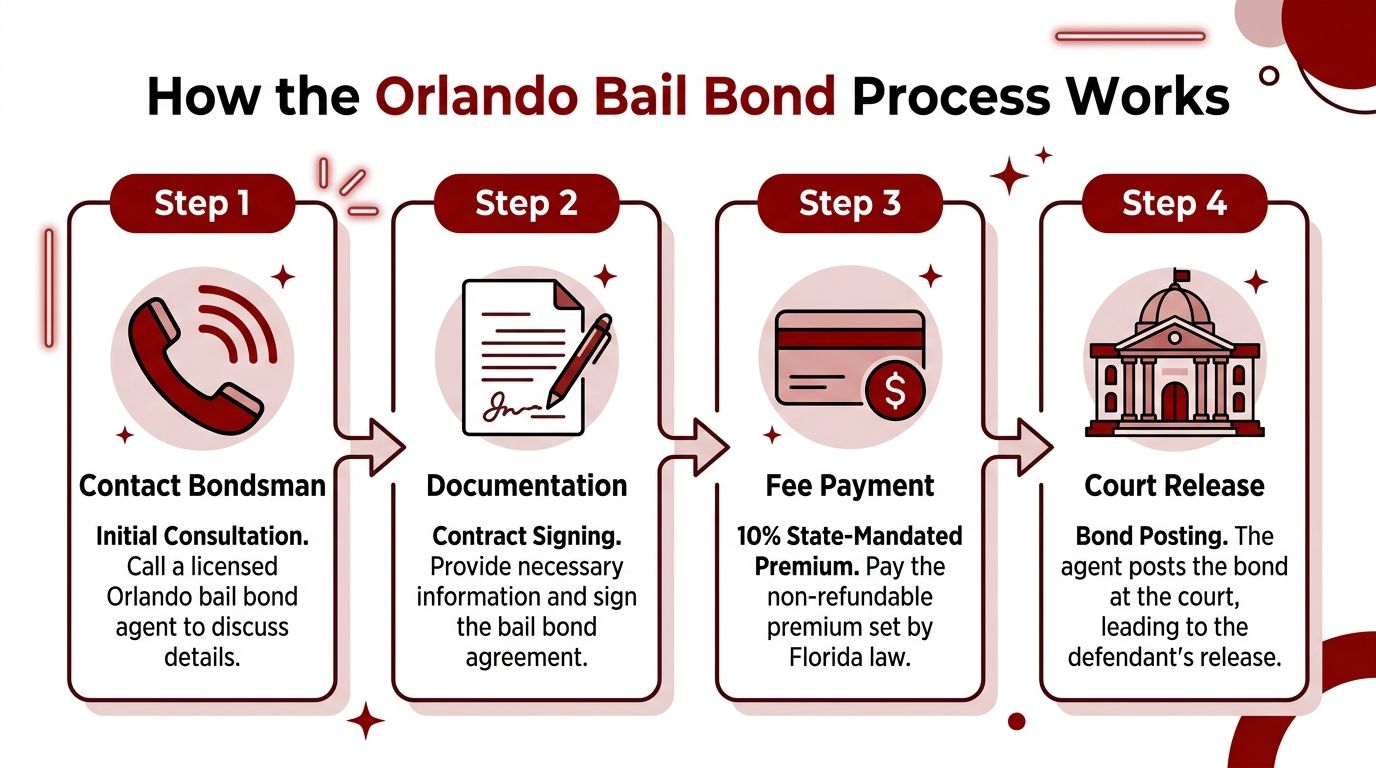
The workflow from arrest to release
A surety bond means a licensed bail bondsman posts the bond to the court after the agreement is signed and the premium is paid. The family does not usually put up the full bail amount in cash.
In practical terms, the sequence looks like this: booking is completed, bond is set or confirmed, the indemnitor signs the bond paperwork, payment is arranged, and the bond is posted. After that, the jail handles its own release process. That last part matters because families often expect the door to open as soon as payment goes through. It does not work that way.
A good bondsman can shorten delays on the front end by checking the charge, confirming the bond amount, preparing documents quickly, and posting as soon as the file is ready. Once the bond is accepted, the timeline shifts to jail processing. That is why experienced agents talk in two clocks. One is bond posting time. The other is release time.
Who signs and who carries the risk
The person who signs for the bond is the indemnitor. Signing as an indemnitor means you are taking on real responsibility until the case is resolved.
That responsibility includes helping make sure the defendant appears in court and follows any release conditions. If the defendant misses court, the court can forfeit the bond and issue a warrant. In higher-risk cases, the bondsman may also require collateral before posting the bond. That can involve a vehicle, jewelry, or real estate, depending on the size of the bond and the facts of the case.
Families should slow down here for a minute. Speed matters, but choosing the wrong signer creates bigger problems later. The best indemnitor is the person who can answer the phone, stay organized, and keep the defendant on track with court dates.
A real-world example
Take a common nonviolent arrest in Orange County. A relative calls with the correct legal name, date of birth, and jail location. Bond has already been set. One family member agrees to sign, sends ID, reviews the contract, and asks the right question: is this a straightforward signature bond file, or will collateral be required?
That question saves time. If the case is low risk, the paperwork can usually move without much friction. If the bond is larger, the charge is more serious, or the defendant has a history of missed court, the agent may need more documentation before posting. Families who understand that trade-off get to a clear answer faster than families who only ask, “How soon can you get them out?”
If payment is the next issue, review the available Orlando bail bond payment options before signing. The right plan helps you act quickly without guessing about the total commitment.
Choose the signer carefully, read the agreement, and make sure everyone understands the court obligation attached to release. That is how the process stays fast and avoids preventable setbacks.
Understanding Bail Bond Costs and Payment Options
Families usually ask about money within the first minute of the call. That makes sense. If bail has been set, the immediate question is what it will take to start the release process tonight and what financial responsibility continues after the bond is posted.
What the premium costs in Florida
In Florida, bail bond premiums are regulated by state law. The Florida Statutes set the standard premium structure for surety bail bonds, and that fee is generally earned once the bond is written and posted, which is why families should treat it as a service fee rather than money held for later return. You can review the state rule directly in Florida Statutes section 648.33.
Here is what that usually looks like in practice:
- A $5,000 bond typically means a $500 premium
- A $25,000 bond typically means a $2,500 premium
- A $100,000 bond typically means a $10,000 premium
Those examples help with planning, but the call should not stop at the premium amount.
Costs that affect the real decision
The bigger financial question is the full obligation attached to the bond file. I tell families to get clear answers on four points before anyone signs:
- Whether the premium is refundable. In most standard bond situations, it is not.
- Whether collateral will be required. Larger bonds, higher-risk charges, or a history of missed court can change the file.
- Whether a payment plan changes only the timing or also adds other terms. Lower money due tonight can help, but the signer still needs a realistic plan to finish the agreement.
- Who is signing as indemnitor. That person is taking legal and financial responsibility if the defendant fails to appear.
This is where families either protect themselves or create trouble for later. A quick release matters, but clear terms matter too. The right agreement is one the signer understands, can afford, and can manage through the life of the case.
Payment plans and smart next steps
Payment plans can help a family act fast without coming up with the full premium in one shot. They are useful when the paperwork is clear and the signer knows exactly what is due now, what is due later, and what happens if the court obligation is not met.
Ask for the numbers in plain language. Ask whether collateral is part of the file. Ask what documents are needed to start tonight. If you want a practical overview before you commit, review these bail bond payment options so you know what families commonly compare.
A good Orlando bondsman should be able to explain the cost in a few minutes, tell you what can delay approval, and give you a direct next step instead of vague promises.
Navigating the Orange County Jail Release Process
A family often feels the most tension after the bond is posted. They expect the door to open soon. In Orange County, that stage usually depends on the jail's release queue, not the speed of the bondsman.
The Orange County Corrections Department handles booking and release through its jail system, and release timing can vary based on internal processing at the Orange County Corrections Department. A clean bond file helps. Final release still happens on the jail's schedule.
Orange County Jail booking and release quick facts
| Detail | Information |
|---|---|
| Facility | Orange County Jail Booking and Release Center |
| Area served | Orlando and Orange County |
| Release timing after bond posting | Usually several hours |
| Typical release range | Depends on jail processing conditions |
| Main variables | Queue volume, staffing, shift changes, weekends, holidays |
| Who controls final release | The jail, not the bonding company |
Why release doesn't happen instantly
Once the bond is accepted, the jail still has work to finish before anyone walks out. Staff must verify the release, clear the inmate through the system, and move that person through the discharge process. If several releases are already ahead in line, the wait grows.
A few common delays show up again and again:
- Queue volume: Other inmates may already be waiting for release processing.
- Staffing conditions: Shift changes and staffing levels affect pace.
- Timing: Late nights, weekends, and holidays often slow the line.
- Internal processing steps: Even a straightforward bond can wait while the jail completes its own checks.
Families handle this part better when the information given at the start is complete and accurate. The signer's paperwork should be correct. The phone number on file should work. Transportation should be ready before the release call comes in.
Repeated calls to demand an exact minute-by-minute update usually do not speed anything up, because the jail itself may not give a precise release time. A good bondsman stays available, confirms that the bond was posted properly, and tells you plainly where the delay is likely happening.
Once the bond is posted, the case moves into the jail's hands until release is completed.
If you need help getting the bond posted fast so the jail process can start, contact an Orlando 24-hour bail bond service as soon as booking is complete. Then prepare for a wait measured in hours, keep your phone close, and be ready to pick your loved one up as soon as the jail clears them for release.
Choosing a Trustworthy 24-Hour Orlando Bondsman
Orlando has an established bail bond market. The Orange County registry includes many active agencies, and Florida bail bond agents are regulated by the state's Department of Financial Services, which is part of why reputation matters so much when you're choosing who to trust, as noted in this industry and Florida market overview.

Green flags that matter
You don't need a flashy pitch. You need competence.
Look for these signs:
- They answer directly: In an emergency, long voicemail chains are a bad sign.
- They explain the contract in plain English: You should understand the premium, signer duties, and any collateral issue before signing.
- They know the local jail workflow: A local operator should speak clearly about booking, posting, and release timing without sounding rehearsed.
- They stay calm: Panic is contagious. Good bondsmen lower it.
- They respect the seriousness of the signer's role: If they rush past indemnitor responsibility, that's a problem.
Red flags to avoid
Bad agencies usually reveal themselves quickly.
Be cautious if someone:
- Promises instant release: No honest bondsman controls the jail's internal queue.
- Gets vague about total cost: If you can't get a straight answer on what you owe and what you risk, stop there.
- Pressures you to sign immediately without explanation: Urgency is real. Confusion shouldn't be.
- Treats collateral like a footnote: If assets are involved, the terms should be clear.
- Acts like court appearance risk is no big deal: That risk is the center of the whole bond.
Questions worth asking on the first call
A fast screening call can tell you a lot. Ask:
- What do you need from me to start right now?
- Who will be signing as indemnitor, and what does that person agree to?
- Is collateral likely in this case?
- After posting, what part of the timeline is in your control and what part is in the jail's control?
- Can you explain the agreement before I commit?
If you're comparing round-the-clock availability and responsiveness, this page on 24-7 bail bond support reflects the kind of accessibility families should look for in any market.
The right bondsman won't make a stressful night feel pleasant. They will make it feel organized, understandable, and under control. That's what you want when every hour matters.
If you need immediate help from a trusted team in North Georgia, One Call Bail Bonds is available around the clock to guide you through the release process with clear answers and fast action. Whether you're trying to understand the next step, gather the right information, or start a bond right away, their team helps families move from panic to a practical plan.